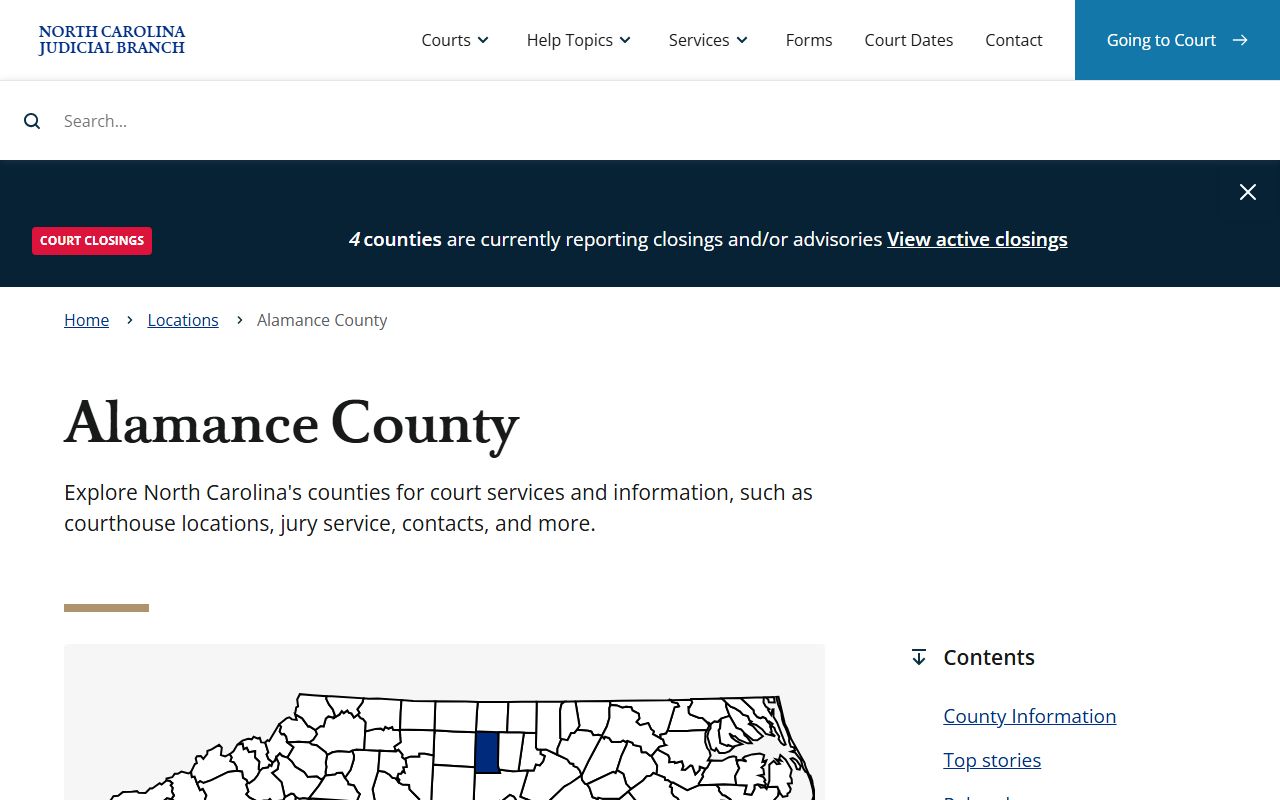
Alamance County Probate Court Records
Alamance County probate court records are kept by the Clerk of Superior Court in Graham, North Carolina. The Estates Division handles all probate filings for the county. This includes wills, estate administration, and guardianship cases. If you need to search for a will or look up estate records in Alamance County, the clerk's office is your main resource. You can visit in person or call ahead for help with probate court records. The office also accepts email requests for basic estate information at Alamance.Estates@nccourts.org.
Alamance County Quick Facts
Alamance County Clerk of Court for Probate
The Alamance County Clerk of Superior Court serves as the judge of probate. The clerk decides if a will is valid. The clerk also handles all matters tied to estate administration that need a court hearing. The Estates Division is at the Historic Courthouse at 1 Court Square in Graham. Staff can help you start an estate case or look up an old one. Call the Estates Division at (336) 570-5204 for questions about Alamance County probate court records.
The main courthouse sits at 212 W Elm St in Graham, NC 27253. All cities and towns in Alamance County file probate cases here. This includes Burlington, Mebane, Elon, Haw River, and Graham. Estate and Special Proceedings matters are now handled by appointment. Call or email before you visit. The Alamance County clerk's office keeps all court records and gives public access during business hours. You can get certified copies of probate court records for a fee.
For more on the Alamance County court system, visit the NC Courts Alamance County page.
| Court |
Alamance County Clerk of Superior Court Estates Division, Historic Courthouse 1 Court Square Graham, NC 27253 Phone: (336) 570-5204 |
|---|---|
| Hours | Monday through Friday, 8:00 AM to 5:00 PM (by appointment for estates) |
| Alamance.Estates@nccourts.org | |
| Website | nccourts.gov/locations/alamance-county |
How to Search Alamance County Probate Records
You can search Alamance County probate court records in person or online. For in-person access, go to the Estates Division at 1 Court Square in Graham. Bring your ID. Staff can look up estate files by the name of the person who died or by case number. Older records may take more time to find. You may also file a public records request for specific probate court records in Alamance County.
The NC eCourts portal lets you search civil case records across all counties. You can look up Alamance County cases by party name or case number. Basic case data is free. For copies of actual documents, you must contact the clerk or visit the courthouse. Some older Alamance County probate court records may not be in the online system yet.
To search, you will need:
- Full legal name of the person who died
- Approximate year of death or filing
- Case number if you have it
- Your photo ID for in-person visits
You can also reach the Alamance County Estates Division by fax at (336) 570-5201. Email requests go to Alamance.Estates@nccourts.org. Staff will respond with basic case details but cannot give legal advice about your Alamance County probate court records.
Estate Filing Process in Alamance County
Starting a probate case in Alamance County follows a set path under North Carolina law. The process creates a public record at each step. The Clerk of Superior Court keeps all these documents at the courthouse in Graham.
First, you file an Application for Probate using Form AOC-E-201. This form covers both the probate of the will and the request for Letters Testamentary. You must bring the original will, a certified death certificate, and an Estates Action Cover Sheet (Form AOC-E-650). The clerk assigns a case number and collects the filing fee. Under N.C.G.S. Chapter 28A, the Clerk of Superior Court has jurisdiction over estate proceedings in the county where the person lived at death. If they lived in Alamance County, you file here.
The person named as executor must take an oath in person at the Alamance County clerk's office. Bond may be required unless the will waives it. After the clerk issues Letters Testamentary, the executor must publish a Notice to Creditors in a local newspaper once a week for four weeks. Creditors then have 90 days to file claims against the estate. An inventory of all assets is due within 90 days of qualification. These steps all produce records that become part of the Alamance County probate court records file.
The executor must file an annual account with the clerk showing income, expenses, and distributions. When the estate is fully settled, a final account is filed and the clerk closes the case. Simple estates in Alamance County may take six to nine months. More involved cases can last a year or more.

Alamance County Probate Filing Fees
Alamance County follows the North Carolina fee schedule set by N.C.G.S. 7A-307. The filing fee is $120 to open an estate. There is also an estate administration fee of 0.4% of the gross estate value. This fee has a cap of $6,000.
Other costs include:
- Certified copies of Letters: about $5 each
- Notice to Creditors publication: $50 to $150
- Bond premium: varies by estate size
- Attorney fees: typically 2% to 4% of estate value
Fees can change over time. Call the Alamance County Estates Division at (336) 570-5204 to confirm current rates before you file. If you have low income, you may apply for a fee waiver by filing a Petition to Proceed as an Indigent with the Alamance County court.
Note: The executor may use estate funds to pay court costs, attorney fees, and other administration expenses in Alamance County.
Small Estate Probate in Alamance County
North Carolina allows a shortcut for small estates. It is called the Affidavit for Collection of Personal Property. This avoids full probate. In Alamance County, you file this with the Clerk of Superior Court in Graham.
You may use this process if the total personal property is $20,000 or less. If the applicant is the surviving spouse and sole heir, the limit goes up to $30,000. You must wait at least 30 days after the date of death before filing. The small estate affidavit uses Form AOC-E-203B from the NC Administrative Office of the Courts. You need a certified death certificate, the original will if one exists, and a list of assets with values.
The filing fee for a small estate affidavit in Alamance County is $120. This is the same as a full estate. But you avoid the ongoing administration steps like annual accounts and the Notice to Creditors. The process is much faster. Most small estate cases in Alamance County close within a few weeks.
Note: Small estate affidavits do not cover real property in Alamance County, so if the person owned land or a house, you may need full probate.
Alamance County Historical Probate Records
Alamance County was formed in 1849 from Orange County. The county seat is Graham. Probate court records in Alamance County date back to the county's formation. The clerk's office holds wills, estate inventories, bonds, and accounts from that era forward.
For records older than 1868, check the North Carolina State Archives in Raleigh. The Archives has microfilm of original pre-1868 probate records from many counties, including Alamance County. Wills before 1760 are in the Secretary of State Papers collection. The Alamance County contact directory can direct you to the right office for historical record requests.
The Alamance County Register of Deeds also keeps records that may help with genealogy research. This office has birth and death records, marriage licenses, and land records. The Register of Deeds office is at the county government building in Graham. Between the clerk's office and the Register of Deeds, you can access most historical Alamance County probate court records and related documents. The Alamance County Clerk of Court website has more details on available records.
Cities in Alamance County
All cities and towns in Alamance County file probate cases at the Clerk of Superior Court in Graham. The courthouse serves the entire county from one location.
Other communities in Alamance County include Mebane, Elon, Haw River, Gibsonville, Green Level, and Swepsonville. All Alamance County probate court records are filed at the Graham courthouse.
Nearby Counties
These counties border Alamance County. Make sure you file in the right county for the court to have jurisdiction. The person who died must have lived in Alamance County for the clerk here to handle the probate case.