
Columbus County Probate Records Search
Columbus County probate court records are kept at the Clerk of Superior Court in Whiteville, the county seat. This southeastern North Carolina county handles all estate filings through one courthouse location. Residents and family members can search for wills, estate inventories, letters of administration, and guardianship records at this office. Columbus County probate court records are part of the public record and available for review. The clerk staff can help you find specific cases, request copies, and guide you through the process of opening a new estate filing when needed.
Columbus County Quick Facts
Columbus County Probate Court Clerk
The Columbus County Clerk of Superior Court serves as the judge of probate. The courthouse is located in Whiteville. This office handles all estate proceedings, including wills, guardianships, and estate administration. Every municipality in Columbus County files estate matters here, from Whiteville and Tabor City to Fair Bluff, Chadbourn, and Lake Waccamaw.
The Estates Division processes probate applications and maintains all case files. Staff can explain the required forms and filing steps. They cannot provide legal advice, but they are available to answer procedural questions during regular business hours. The clerk keeps a full record of every estate case in the county.
The NC Courts website shows Columbus County court information and available services.
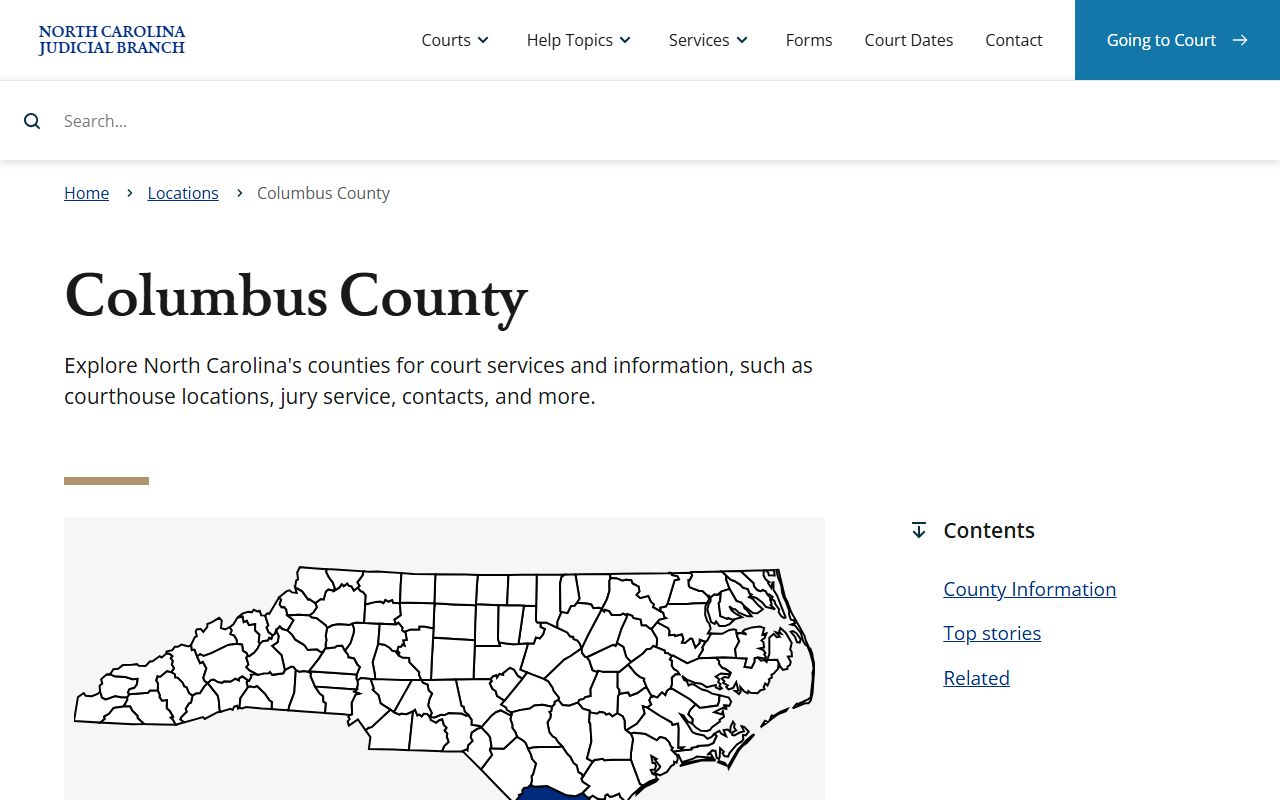
This page provides an overview of the court system in Columbus County.
| Court |
Columbus County Clerk of Superior Court Whiteville, NC 28472 Phone: (910) 641-3000 |
|---|---|
| Hours | Monday through Friday, 8:00 AM to 5:00 PM |
| Website | nccourts.gov/locations/columbus-county |
How to Search Columbus County Estate Records
You can search Columbus County probate court records online or in person. The NC eCourts portal at nccourts.gov offers free case searches by name or case number. Basic details are shown online. Document copies require a direct request to the clerk.
For a more thorough search, visit the courthouse in Whiteville. Bring your photo ID. Staff can look up cases by the name of the deceased, the executor, or the case number. You can view the full file and order copies on the spot.
The Columbus County courthouse page provides building access details.
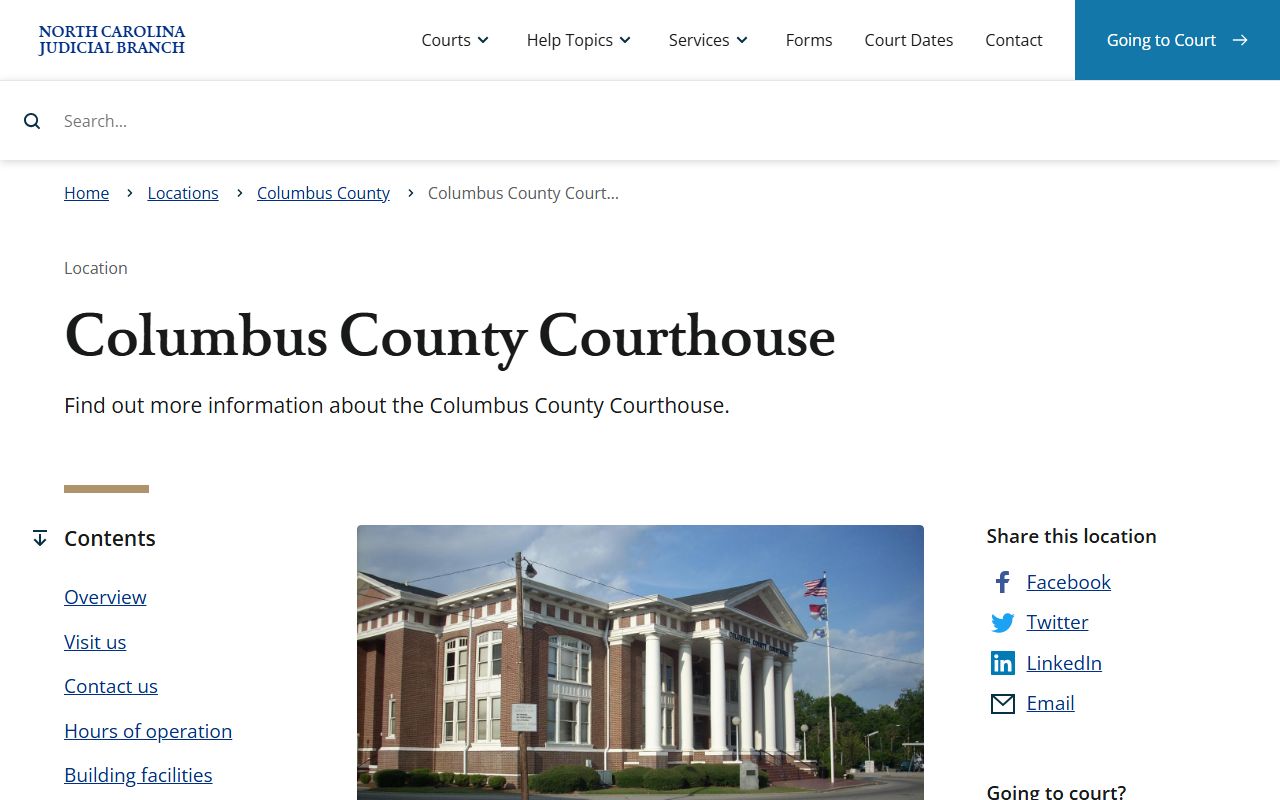
Check this page for hours and directions to the Whiteville courthouse.
Columbus County Estate Filing Process
To open an estate in Columbus County, file an application at the Clerk of Superior Court. Bring the original will, a certified death certificate, and details about assets and heirs. Under N.C.G.S. Chapter 28A, the clerk handles estates in the county where the deceased lived.
The personal representative takes an oath. Bond may be required. The clerk issues letters that grant legal authority over the estate. A Notice to Creditors runs for four weeks in a local paper. Creditors then have 90 days. An inventory is due within 90 days of qualification.
The representative manages the estate through debts, taxes, and distributions. Annual accounts go to the clerk. A final account closes the estate. In Columbus County, simple estates generally close in six to nine months. More involved cases take longer.
Note: North Carolina law allows both common form probate without a hearing and solemn form probate with notice and a hearing. The choice affects how soon the probate becomes final.
Probate Fees in Columbus County
Columbus County uses the state fee schedule under N.C.G.S. 7A-307. The base filing fee is $120. An administration fee of 0.4% of gross estate value applies, capped at $6,000.
Other costs include certified copies at about $5, newspaper publication at $50 to $150, bond premiums based on estate value, and attorney fees of 2% to 4%. Personal representative compensation can reach 5% of estate receipts. All costs are paid from the estate.
Columbus County Small Estate Affidavit
If the deceased person's personal property totals $20,000 or less, heirs may skip full probate. The limit is $30,000 for a surviving spouse who is sole heir. This uses N.C.G.S. 28A-25-1.
File Form AOC-E-203B with the Columbus County clerk. Bring a death certificate, photo ID, itemized asset list, and the will if one exists. Wait 30 days after the death. The fee is $120. Real estate is not included in this process.
Once approved, the heir can present the affidavit to banks, insurance companies, and other institutions to collect the deceased person's assets. This process avoids the cost and time of full estate administration. For any real property in Columbus County, a full probate proceeding is required to transfer the deed through the court.
Historical Columbus County Estate Records
Columbus County was formed in 1808 from Brunswick and Bladen Counties. It is named for Christopher Columbus. Estate records go back to the early 1800s. The Whiteville courthouse holds post-1868 records. Pre-1868 records are on microfilm at the North Carolina State Archives in Raleigh.
Genealogy researchers will find Columbus County probate records valuable. They name heirs, describe property, and document family connections from over two centuries ago. The FamilySearch wiki offers tips on searching North Carolina estate records for family history. Researchers should also check records from Brunswick and Bladen Counties, the parent counties from which Columbus was formed. Estate records for people who lived in the area before 1808 would be filed under those jurisdictions.
The contact directory lists staff who manage records at the Columbus County clerk office.
Use these contacts for help with current or historical record requests.
Cities in Columbus County
Columbus County includes Whiteville, Tabor City, Fair Bluff, Chadbourn, Lake Waccamaw, Bolton, Cerro Gordo, Brunswick, Boardman, and Sandyfield. All probate filings go through the Clerk of Superior Court in Whiteville.
Nearby Counties
These counties border Columbus County. Estate filings must be made where the deceased was domiciled at the time of death.