
Access Durham Probate Records
Durham probate court records are maintained by the Durham County Clerk of Superior Court on South Dillard Street. The Estates Division on the second floor handles all estate filings for Durham County. You can search for wills, estate inventories, guardianship records, and other probate court records at the courthouse or through the state court portal. Durham residents and family members have public access to these records during regular business hours.
Durham Quick Facts
Where to File Probate in Durham
Durham probate court records are filed at the Durham County Clerk of Superior Court. Clerk Aminah M. Thompson serves as the judge of probate for the county. The Estates Division is on the 2nd floor in Room 2300. Special Proceedings, which handles related matters like guardianships for adults and name changes, is in Room 2400 on the same floor.
| Court | Durham County Clerk of Superior Court |
|---|---|
| Address | 510 S Dillard Street Durham, NC 27701 |
| Phone | 919-808-3000 |
| Estates Division | 2nd Floor, Room 2300 (919) 808-3004 |
| Special Proceedings | 2nd Floor, Room 2400 (919) 808-3009 |
| Hours | Monday through Friday, 8:30 AM to 5:00 PM |
| Website | nccourts.gov/locations/durham-county |
The courthouse is in downtown Durham. You will go through security screening at the entrance. Bring a valid photo ID and avoid large bags. Staff in the Estates Division can help you with record lookups and filing questions for Durham probate court records.
How to Search Durham Probate Records
You can search Durham probate court records two ways. The online option uses the North Carolina eCourts portal. You search by the name of the person who died or by case number. Basic case details like filing dates and party names are available at no charge. For copies of the actual documents, you must visit the Estates Division or call (919) 808-3004.
The screenshot below is from the Durham County court page on the NC Courts website.
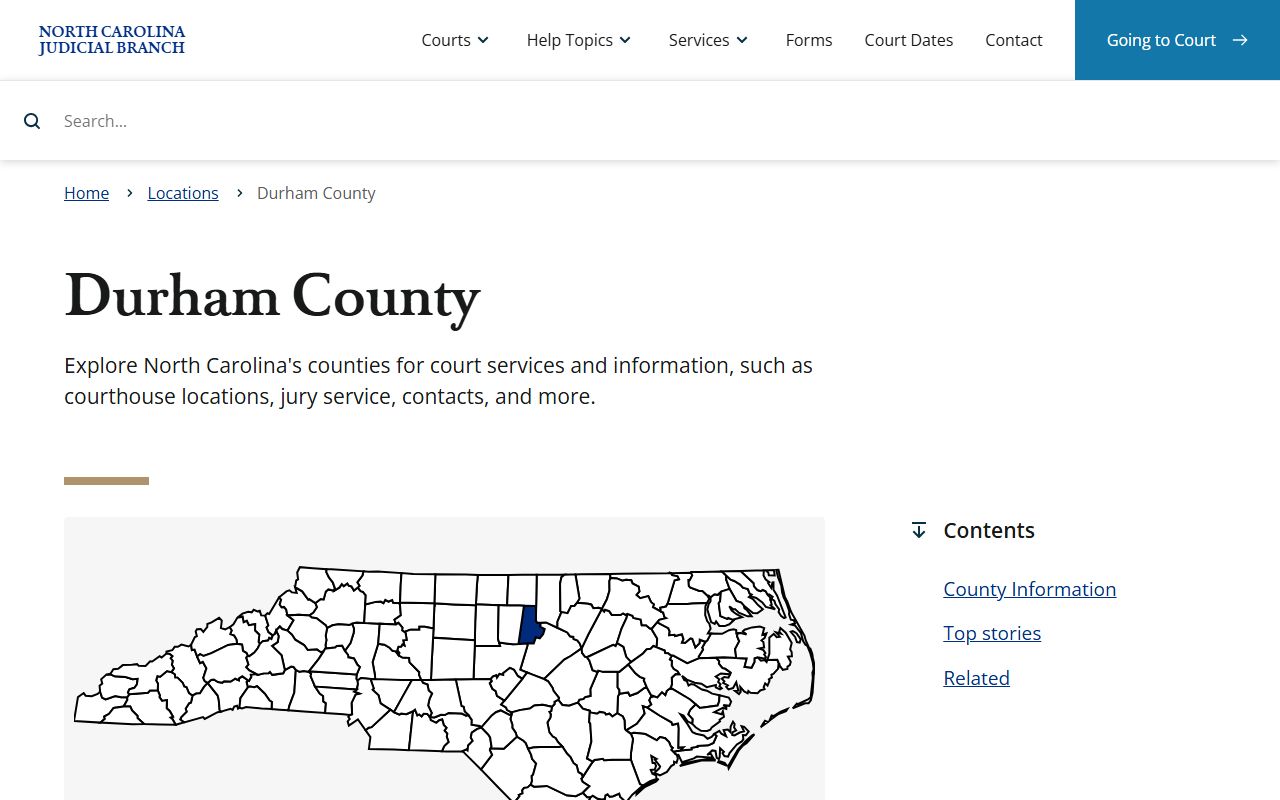
This page has links to court divisions and online records access for Durham probate court records.
In person, the staff in Room 2300 can look up estate files by name or case number. They can pull the file and make copies for you. Certified copies of letters cost about $5 each. Plain copies cost less. You can set an appointment with staff so they are available to help you throughout the process. Call the Estates Division ahead of time to arrange this.
The Durham County government also provides probate resources on its website. This site has information about the clerk's office and the types of cases the Estates Division handles.
Note: Staff at the clerk's office cannot give legal advice, but they can explain procedures and help with form selection for Durham probate court records.
Durham Estate Administration Process
When you visit the Estates Division in Durham, a staff member will ask questions to figure out what type of estate you need to open. They will explain what documents and information to bring with you. Each filing creates a part of the probate court records in Durham that tracks the progress of the estate.
Items to bring to the Durham Estates Division:
- The original will if one exists
- A certified copy of the death certificate
- Details of the deceased's assets at fair market value
- Names, relationships, and addresses of next of kin or will beneficiaries
- Bank account numbers and balances as of the date of death
- Copies of signature cards for joint bank accounts
- Stock information with share counts and values at death
You will also need vehicle values and proof of ownership like a title or tax bill. Bring real estate values and copies of deeds if the person who died owned property. The clerk uses all of this information to set up the estate file and determine what fees and bond amounts apply. These documents become part of the permanent Durham probate court records.
The image below is from the Durham County courthouse page on the state courts site.
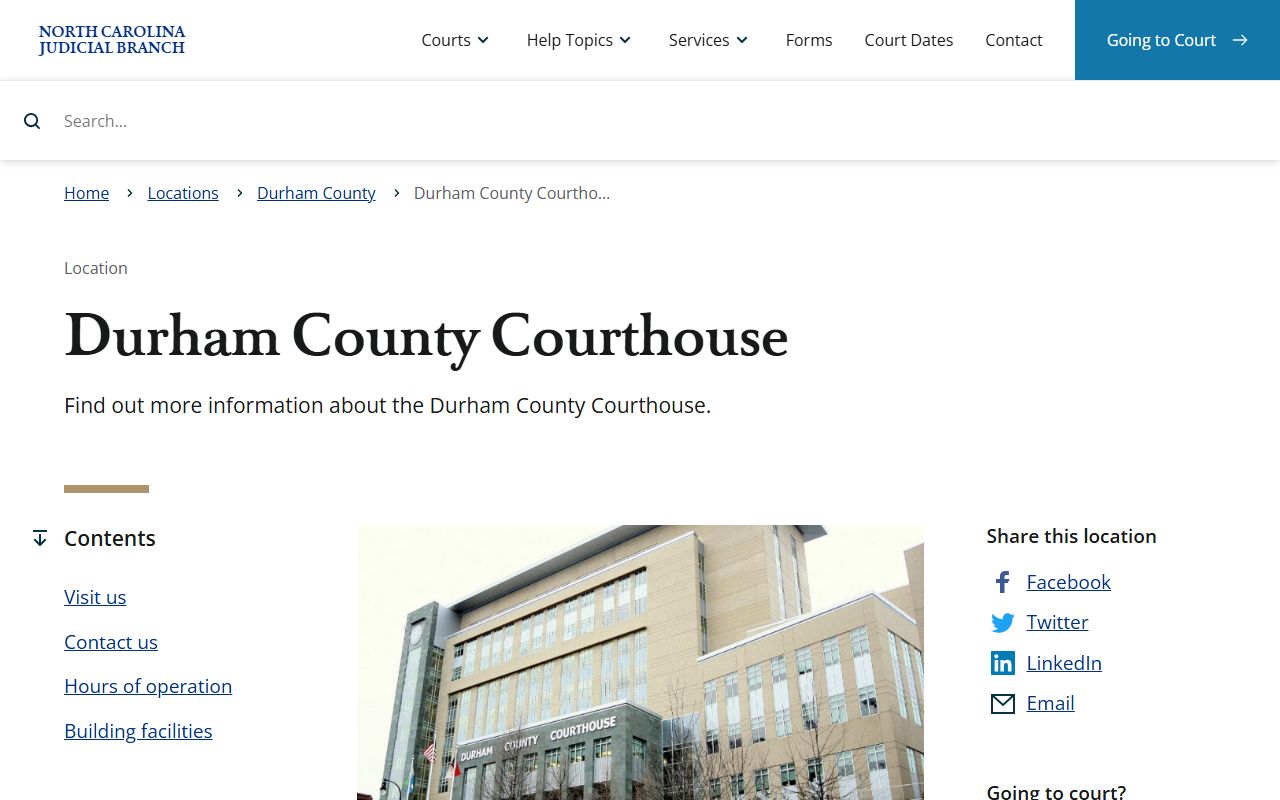
This shows information about the Durham County courthouse where all estate filings are processed.
After you qualify as the personal representative, you must publish a Notice to Creditors in a local Durham paper for four weeks. You have 90 days to file an inventory. Annual accounts are required each year until the estate closes. Handling an estate is a serious responsibility. If you make errors, family members may take legal action or the court may hold you in contempt. The clerk strongly advises hiring an experienced estates attorney. Those fees can be charged against the estate.
Durham Probate Fees
The filing fee to open an estate in Durham is $120, the same as the rest of North Carolina. The clerk also collects an administration fee of 0.4% of the gross estate value, with a cap at $6,000. Call (919) 808-3004 to confirm current fees before filing Durham probate court records.
Other costs include bond premiums if bond is required, the Notice to Creditors publication fee, and certified copy fees. The personal representative can claim up to 5% of the estate's receipts and disbursements as compensation. Attorney fees for probate in Durham typically range from 2% to 4% of the estate value. All of these costs come out of the estate.
If you cannot pay the fees, you may file a Petition to Proceed as an Indigent. You must provide proof that you cannot afford the court costs. The judge reviews the petition and decides. Getting copies of existing Durham probate court records has its own fees, with certified copies at about $5 each.
Small Estates in Durham
Durham residents with small estates may be able to avoid full probate. The small estate affidavit works when the personal property is valued at $20,000 or less. If the applicant is the surviving spouse and the only heir, the limit is $30,000. You must wait at least 30 days after the death to file.
Bring a certified death certificate, the completed form AOC-E-203B, an itemized list of assets with values, and your photo ID to the Estates Division in Room 2300. The fee is $120. This process creates a simpler set of probate court records in Durham than a full estate administration.
Note: The small estate affidavit cannot be used if the person who died had real property that needs to be sold within two years of the death date.
Durham Court Contact Information
The image below is from the Durham County contact directory on the NC Courts site.
This page shows direct phone numbers for the Estates Division and other court offices that handle Durham probate court records.
The Estates Division handles guardianships, transfer of title after a death, Year's Allowance petitions, wills and probate, and inventories. The Special Proceedings Division in Room 2400 handles adult guardianships, name changes, adoptions, foreclosures, and partition disputes. Both divisions create records that may be part of or related to Durham probate court records.
Durham County Probate Court Records
Durham is the county seat of Durham County, and all estate filings go through the Durham County Clerk of Superior Court. The county court handles every probate case in the county. For more details on the county court system, fee schedules, and related resources, visit the Durham County probate court records page.