
Access Durham County Estate Records
Durham County probate court records are housed at the Clerk of Superior Court's office on S. Dillard Street in Durham. The Estates Division manages wills, estate administration files, guardianship records, and inventories for all estates opened in the county. Whether you need to look up a will, track the progress of an estate case, or get certified copies of probate documents, the Durham County clerk's office is the central resource. You can visit in person or begin your search through the North Carolina court system online.
Durham County Quick Facts
Durham County Probate Court Clerk
Aminah M. Thompson serves as the Clerk of Superior Court in Durham County. The Estates Division is on the 2nd floor, Room 2300. This division handles wills, probate of estates, inventories, guardianships, year's allowance claims, and transfers of title at death. A separate Special Proceedings Division on the same floor handles adult guardianships, name changes, and foreclosures.
The clerk's office asks that you bring several items when opening an estate. These include the original will, a certified death certificate, asset details, and information about next of kin. Staff will ask questions to figure out what type of estate you need. They can set up an appointment so someone is available to help you through the whole process. Staff cannot give legal advice, but they strongly recommend hiring an estates attorney. Mistakes in estate administration can lead to lawsuits or contempt of court in Durham County.
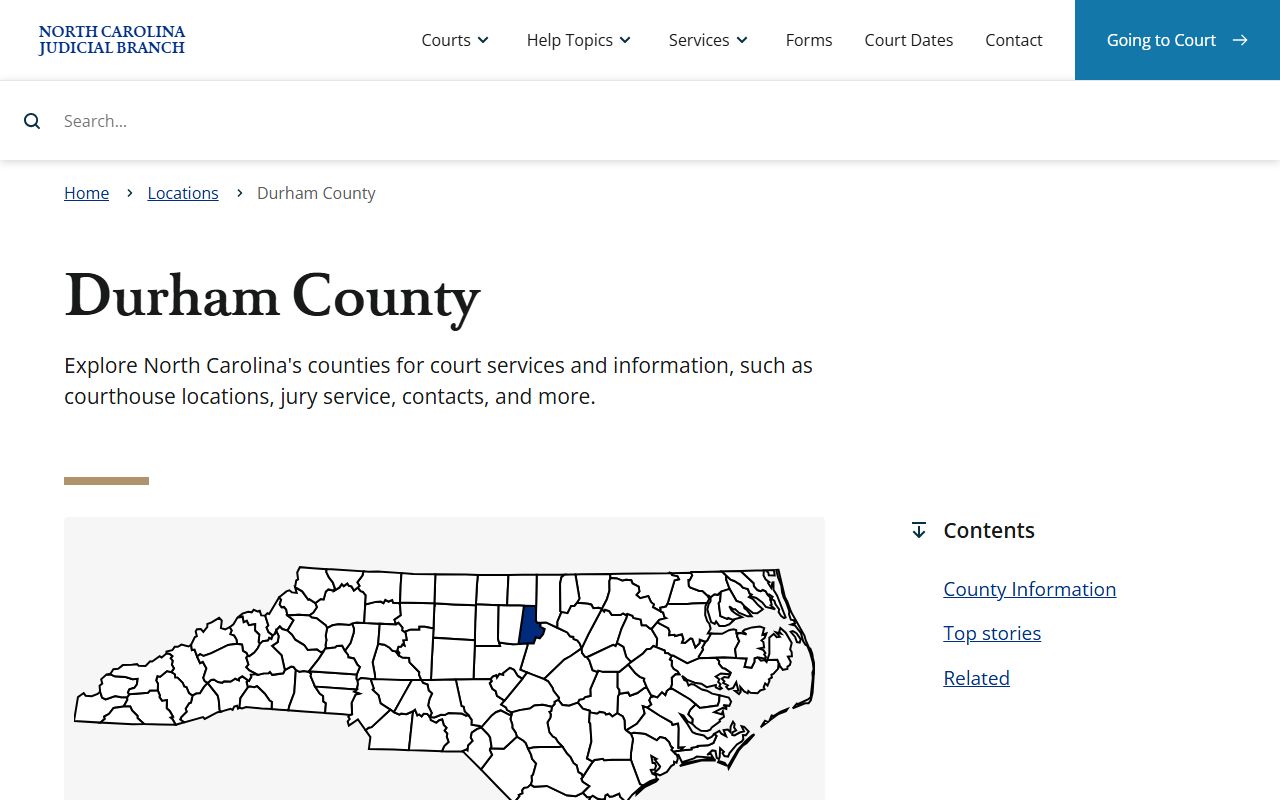
The courthouse is located at 510 S. Dillard St in Durham. All cities and towns in the county use this office for probate court records.
| Court |
Durham County Clerk of Superior Court Estates Division, 2nd Floor, Room 2300 510 S. Dillard St Durham, NC 27701 Phone: (919) 808-3004 |
|---|---|
| Hours | Monday through Friday, 8:00 AM to 5:00 PM |
| Website | nccourts.gov/locations/durham-county |
Search Durham County Probate Records
Durham County offers several ways to look up probate court records. The quickest starting point for recent cases is the NC eCourts portal at nccourts.gov. You can search by name or case number at no cost. The system shows basic case details like filing dates, parties, and case status.
For full documents, go to the courthouse. The Estates Division on the 2nd floor can pull case files and make copies. Bring your ID and the name of the deceased. A case number helps, but staff can search by name. You can review the file on site and request copies.
Durham County also provides probate resources through the county government website at dconc.gov. This site has contact information and guidance for the Estates Division.
To search Durham County probate court records, you typically need:
- Full legal name of the deceased
- Year of death or year the estate was opened
- Case number if known
Durham County Estate Administration
Opening an estate in Durham County begins at the Estates Division. You bring the original will, a certified death certificate, and detailed information about the deceased person's assets. The clerk will need bank account numbers and balances, stock information, vehicle details including VIN numbers, and real estate values with copies of deeds. Names and addresses of all heirs or beneficiaries are also required.
Under N.C.G.S. Chapter 28A, the Clerk of Superior Court has authority over all estate matters. The clerk reviews the will and, if it meets legal requirements, admits it to probate. The personal representative takes an oath and posts bond if required. The clerk then issues letters testamentary, which give the representative legal power to manage the estate.
A Notice to Creditors must be published in a local paper for four weeks. Creditors have three months to file claims. The representative pays valid debts, handles tax matters, and distributes assets to the beneficiaries. A final account is filed with the Durham County clerk. This entire process generates the probate court records that are kept on file.
Note: The Durham County clerk's office urges personal representatives to hire an attorney due to the complexity of estate law and the personal liability involved.
Probate Filing Fees in Durham County
Filing fees in Durham County follow the state schedule. The base cost to open an estate is $120. An additional administration fee of 0.4% of the gross estate value applies, capped at $6,000. This is set by N.C.G.S. 7A-307.
Additional costs you may encounter include:
- Certified copies of letters: approximately $5 per copy
- Notice to Creditors in a newspaper: $50 to $150
- Surety bond premium: 0.5% to 1% of bond per year
- Attorney fees: typically 2% to 4% of estate value
- Executor compensation: up to 5% of receipts and disbursements
Call (919) 808-3004 to confirm current fees before visiting the Durham County Estates Division.
Small Estates in Durham County
Not every estate in Durham County needs full probate. Under N.C.G.S. 28A-25-1, if the deceased person's personal property is $20,000 or less, an heir can use a small estate affidavit. The limit rises to $30,000 for a surviving spouse who is the sole heir.
You file Form AOC-E-203B at the clerk's office. At least 30 days must have passed since the date of death. Bring a certified death certificate, your photo ID, and a list of all assets with their values. The filing fee is $120. This approach lets you collect bank funds, vehicle titles, and other personal property without a full estate proceeding.
Real property cannot be transferred through this method. If the estate includes land or a home, full probate is required in Durham County.
Historical Durham County Estate Records
Durham County was formed in 1881 from Orange and Wake counties. Estate records from 1881 forward are kept at the courthouse. For earlier records, check with the Orange County or Wake County clerks, or visit the North Carolina State Archives in Raleigh.
The State Archives holds microfilm of older probate records from counties across the state. Researchers can access wills, inventories, and estate accounts from the colonial period forward. For Durham County specifically, the local public library system also has resources that may help with family history and estate research.
Browse Nearby Counties
Durham County borders several other counties in the Triangle region. Estates are filed in the county where the person lived at the time of death. Make sure you search the correct county for the records you need.