
Wake County Probate Court Records
Wake County probate court records are housed at the Wake County Justice Center in Raleigh, North Carolina. As the most populous county in the state with over 1.2 million residents, Wake County processes a high volume of estate filings each year. Searching for probate court records in Wake County gives you access to wills, estate inventories, letters testamentary, and guardianship documents. The Estates and Special Proceedings Division manages all these records. Whether you need to look up a recent filing or track down an older case, the clerk office in downtown Raleigh is the primary source for Wake County probate court records.
Wake County Quick Facts
Wake County Clerk of Superior Court
The Clerk of Superior Court in Wake County sits as the judge of probate. The Estates and Special Proceedings Division handles all probate cases, wills, estate administration, guardianships, and conservatorships. This division is located at the Wake County Justice Center at 316 Fayetteville Street in downtown Raleigh. The main courthouse phone is (919) 792-4000, and the Estates Division can be reached directly at (919) 792-4450.
The Wake County Justice Center serves the entire county from one location. This includes all cities and towns such as Raleigh, Cary, Apex, Holly Springs, Fuquay-Varina, Wake Forest, Garner, Knightdale, Morrisville, Wendell, Zebulon, and Rolesville. Every resident of Wake County files their estate matters here. The clerk staff can search probate court records by name or case number and provide copies on the spot.
Visit the Wake County Clerk of Court website for more details on the Estates Division and its services.
The NC Courts website also has a dedicated page for Wake County with directions and contact details for each division.
| Court |
Wake County Clerk of Superior Court Estates & Special Proceedings Division Wake County Justice Center 316 Fayetteville Street Raleigh, NC 27601 Phone: (919) 792-4000 Estates Division: (919) 792-4450 |
|---|---|
| Hours | Monday through Friday, 8:30 AM to 5:00 PM |
| Mailing | PO Box 5550, Raleigh, NC 27602 |
| Website | nccourts.gov/locations/wake-county |
Search Wake County Probate Court Records
Wake County offers multiple ways to search for probate court records. You can use the online portal, visit the courthouse in person, request records by mail, or call the Estates Division directly. Each method serves a different need. Online tools are best for quick lookups. In-person visits let you review the entire file.
The North Carolina eCourts portal at nccourts.gov provides free access to basic case information for all North Carolina counties including Wake County. Search by party name or case number. The system shows filing dates, case type, and party names. For actual documents within a probate court record, you will need to contact the clerk office or visit the Wake County Justice Center.
Certified copies of Wake County probate court records can be requested in person at the clerk office, through the online portal, or by mail. Send your written request with the applicable fee to PO Box 5550, Raleigh, NC 27602. Court fees, fines, and other payments can also be made online through the Wake County Clerk of Court online payment portal.
To search for a specific estate case in Wake County, have the following ready:
- Full legal name of the deceased person
- Date of death or approximate year of filing
- Case number if available
- Photo ID for in-person visits
Note: The Wake County clerk staff cannot give legal advice. They can help you locate probate court records and explain filing procedures, but they cannot advise you on how to handle an estate or what forms to use for your situation.
Wake County Estate Administration
The estate process in Wake County begins at the Clerk of Superior Court in the Justice Center. The proposed personal representative brings the original will, a certified death certificate, and information about the deceased person's assets and heirs. The clerk requires the original will. Copies are not accepted unless a lost-will petition is filed. Form AOC-E-201 is used for the application for probate and letters testamentary.
Wake County offers the same probate pathways found across North Carolina. Common form probate does not require a hearing. The clerk reviews the will and supporting documents and, if everything is in order, admits the will to probate. This type of probate is subject to challenge for three years. Solemn form probate requires notice to all interested parties and a hearing before the clerk. Once granted through solemn form, the probate is immediately final and binding.
For intestate estates where the person died without a will, a family member or interested party applies for letters of administration. The clerk appoints an administrator based on the priority set by North Carolina law. The administrator then has the same duties as an executor. They gather assets, pay debts, and distribute the estate to the rightful heirs.
The personal representative must appear in person at the Wake County Justice Center to take the oath of office. Bond is generally required unless the will waives it or all heirs consent in writing. After qualification, the representative must publish a Notice to Creditors in a newspaper of general circulation in Wake County. The News and Observer is commonly used for this purpose. An inventory of all estate assets must be filed within 90 days of the date of qualification.
The surviving spouse or minor children may petition for a Year's Allowance of $60,000 from the estate. This allowance has priority over all claims except the costs of administration. A surviving spouse may also elect to take a share of the estate under N.C.G.S. section 30-3.1. The elective share ranges from 3% to 50% of total net assets depending on the length of the marriage. This election must be filed within six months of the personal representative's qualification.
Note: Claims for property division must be filed before the estate is closed. Failing to act within the required time frames can result in the loss of important rights under North Carolina law.
Wake County Probate Fees
Wake County follows the North Carolina fee schedule for estate matters. The application fee to open an estate is approximately $120. The clerk also charges an estate administration fee of 0.4% of the gross probate value, capped at $6,000. These fees are collected at the time of filing.
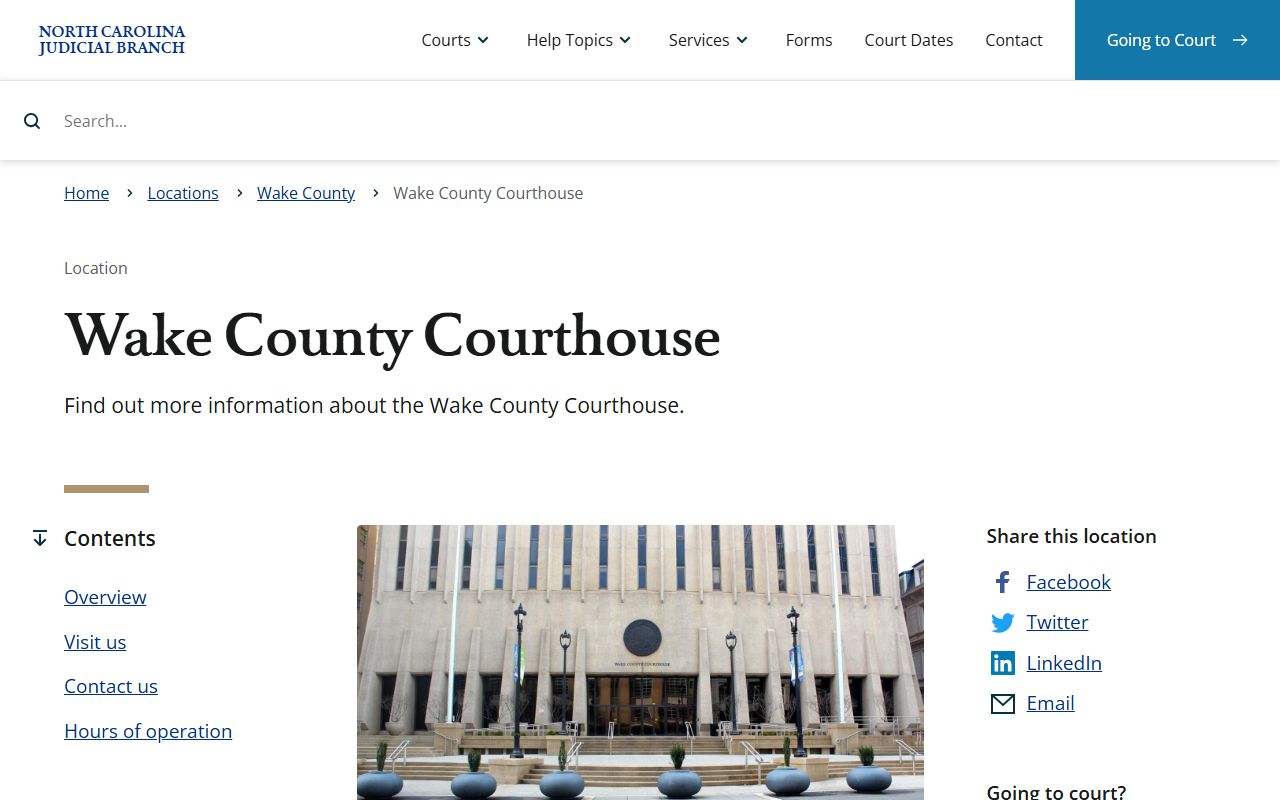
The Wake County courthouse information page on NC Courts has details about hours, location, and office contacts for the Estates Division.
Here are the common fees for probate court records and estate matters in Wake County:
- Estate filing fee: approximately $120
- Administration fee: 0.4% of estate value, up to $6,000
- Certified copies of letters: approximately $5 per copy
- Notice to Creditors publication: $50 to $150
- Bond premium: varies based on estate value
Payments can be made in person at the clerk office, online via the Wake County payment portal, or by mail to PO Box 5550, Raleigh, NC 27602. Simple estates in Wake County typically take 6 to 9 months to complete. Average estates run 9 to 15 months. Complex or contested estates can take 18 months to several years. The minimum timeline includes the 90-day creditor claim period plus inventory, tax, and distribution requirements.
Small Estate Affidavit in Wake County
Wake County offers a simplified process for small estates through the Collection by Affidavit method. This option is available when the deceased person's personal property is valued at $20,000 or less. If the applicant is the surviving spouse and the sole heir, the limit goes up to $30,000. This process skips the full probate administration and lets the heir collect assets with a court-approved affidavit.
To file a small estate affidavit in Wake County, you must wait at least 30 days after the date of death. Go to the Estates Division at the Wake County Justice Center with a certified death certificate, the original will if one exists, an itemized list of all assets with their values, your photo ID, and the $120 filing fee. The form used is AOC-E-203B, available from the clerk or from the NC Courts forms page.
This method works well for straightforward cases with limited assets. It does not cover real property. If the estate includes land or a home that must be sold within two years of death, the small estate affidavit may not be the right fit. Talk to the Wake County clerk staff or an attorney to decide.
Historical Estate Records in Wake County
Wake County was established in 1771 and has maintained probate court records for over 250 years. The clerk office in Raleigh holds estate records from the county's formation to the present. These include wills, estate inventories, bonds, accounts, and guardianship papers. Older records may be in bound volumes or on microfilm.
The North Carolina State Archives, also located in Raleigh, holds microfilm copies of many pre-1868 probate court records. Wills before 1760 are found in the Secretary of State Papers collection at the archives. Researchers doing genealogy work in Wake County will find estate records to be a rich source of family history. Wills list heirs and describe property. Inventories detail personal belongings. Guardian records document the care of children.
For records from neighboring counties or the colonial period, visit the State Archives reading room or check the NC Courts locations directory for contact details of other county clerk offices. The Wake County clerk can also direct you to the right resource if the record you need is not in their files.
Note: Some very old Wake County probate court records may require advance notice to locate. Call the Estates Division at (919) 792-4450 before your visit so staff can prepare the materials.
Browse Nearby County Courts
These counties border Wake County. Probate court records are always filed in the county where the deceased person lived at the time of death. If you are uncertain which county to check, confirm the last known address.