
Find Franklin County Estate Files
Franklin County probate court records are held at the Clerk of Superior Court's office in Louisburg. The clerk keeps wills, estate administration files, inventories, guardianship orders, and all other documents tied to estates opened in the county. Franklin County has maintained these records since 1779, when the county was first created. You can visit the courthouse to search for a specific estate or start with an online lookup through the state court system.
Franklin County Quick Facts
Franklin County Clerk of Court
Patricia Burnette Chastain is the Clerk of Superior Court in Franklin County. The clerk serves as the judge of probate and has authority over wills, estate administration, and guardianships. The Estates Division helps people open new estates, file required documents, and access existing records.
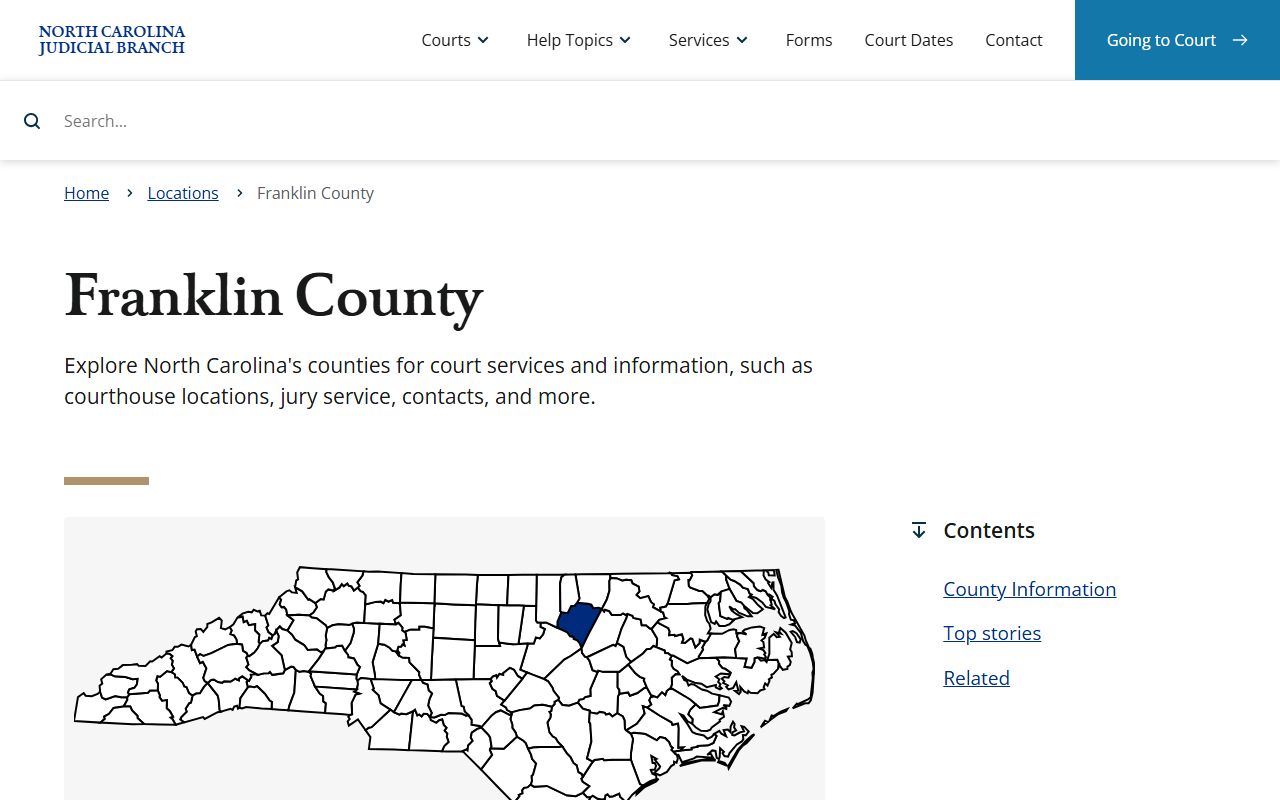
The courthouse is at 102 S Main St in Louisburg. Every town in Franklin County files probate matters at this location. That includes Youngsville, Franklinton, Bunn, and Centerville. The office has been keeping estate records since 1779. Staff can help you find what you need and explain the forms and steps involved in the probate process in Franklin County.
| Court |
Franklin County Clerk of Superior Court 102 S Main St Louisburg, NC 27549 Phone: (919) 496-5104 |
|---|---|
| Hours | Monday through Friday, 8:30 AM to 5:00 PM |
| Website | nccourts.gov/locations/franklin-county |
Searching Franklin County Estate Records
You can look up Franklin County probate court records online or in person. The NC eCourts portal at nccourts.gov is the fastest way to check for recent cases. Search by the deceased person's name or case number. Basic case details are free. For full documents or certified copies, you need to go to the clerk's office.
An in-person visit to the Louisburg courthouse gives you access to the complete file. Bring your ID and as much information as you have about the case. The clerk can search by name or case number. You may review the file at the courthouse and order copies of specific documents.
For the best results, have the following ready:
- Full name of the deceased
- Year the person died or the estate was opened
- Case number if known
Note: Franklin County is near the Triangle region, and some residents may be confused about whether to file in Franklin or Wake County. Check the address carefully.
Probate Process in Franklin County
Opening an estate in Franklin County follows the same steps as the rest of the state. You bring the original will, a death certificate, and asset information to the clerk's office. The clerk reviews the will under N.C.G.S. Chapter 28A and admits it to probate if it is valid.
The executor files Form AOC-E-201 and takes an oath. Bond may be required. The clerk then issues letters testamentary. Without a will, the clerk appoints an administrator. A Notice to Creditors runs in a local paper for four weeks. Creditors have three months to file claims. After debts and taxes are paid, the remaining assets go to the heirs or beneficiaries.
North Carolina allows two forms of will probate. Common form probate is faster and requires no hearing, but it can be challenged for three years. Solemn form probate involves notice to all interested parties and a hearing before the clerk. Once granted, solemn form is final. Most Franklin County estates use common form.
A final account is filed with the Franklin County clerk when the estate is done. Every document from start to finish becomes part of the probate court records on file at the courthouse.
Franklin County Estate Fees
The filing fee for a new estate in Franklin County is $120. An estate administration fee of 0.4% of the gross value also applies, up to $6,000. These fees are governed by N.C.G.S. 7A-307.
Certified copies cost about $5 each. The Notice to Creditors publication runs $50 to $150. Bond premiums are 0.5% to 1% of the bond amount per year. Attorney fees for estate work typically run 2% to 4% of the estate value.
Call (919) 496-5104 to check on current fees before filing your Franklin County probate court records.
Small Estates in Franklin County
Franklin County accepts small estate affidavits for modest estates. If the deceased person's personal property is worth $20,000 or less, you can file Form AOC-E-203B to collect assets without full probate. The limit is $30,000 for a surviving spouse who is the sole heir. This is allowed under N.C.G.S. 28A-25-1.
At least 30 days must pass after the death. You need a death certificate, the affidavit form, your ID, and asset details. The cost is $120. This process covers bank accounts, vehicles, and similar items. It does not cover real estate.
Attach bank statements, vehicle titles, and any proof of asset values. The clerk reviews the form and issues a certified copy. Financial institutions accept this document to release funds to the heir. The process usually wraps up in a few weeks.
Note: If there is a house or land in the deceased person's name, full probate is required in Franklin County regardless of the total value.
Historical Franklin County Probate Records
Franklin County was formed in 1779 from Bute County. Estate records have been kept at the Louisburg courthouse since that time. These early records include wills, administration bonds, inventories, and accounts from the late 1700s and beyond.
The North Carolina State Archives in Raleigh holds microfilm of many older Franklin County estate records. Researchers can also check the Franklin County Library for local history resources. The county's records spanning nearly 250 years make it a good source for genealogy work and family estate research.
Browse Nearby Counties
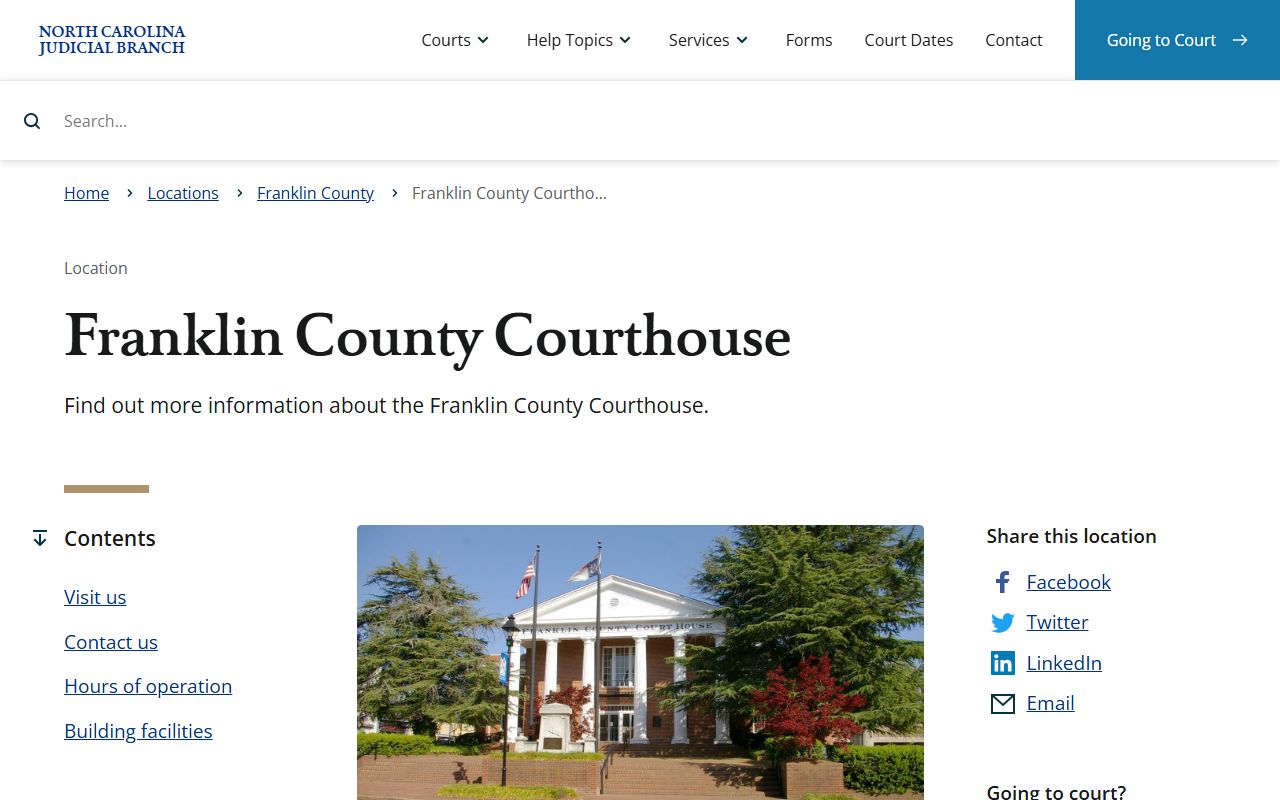
Franklin County shares borders with several counties in north-central North Carolina. Estates must be filed in the county where the deceased person lived. Confirm the correct location before searching for probate court records.