
Buncombe County Estate Court Records
Buncombe County probate court records are maintained by the Clerk of Superior Court in Asheville, North Carolina. Asheville is the largest city in western North Carolina, and Buncombe County is the most populous county in the mountain region. The Estates Division handles all probate matters including wills, estate administration, and guardianships. Whether you need to search for an existing estate file or start a new probate case, the clerk's office at the courthouse in Asheville is where you begin with Buncombe County probate court records.
Buncombe County Quick Facts
Buncombe County Probate Court Clerk
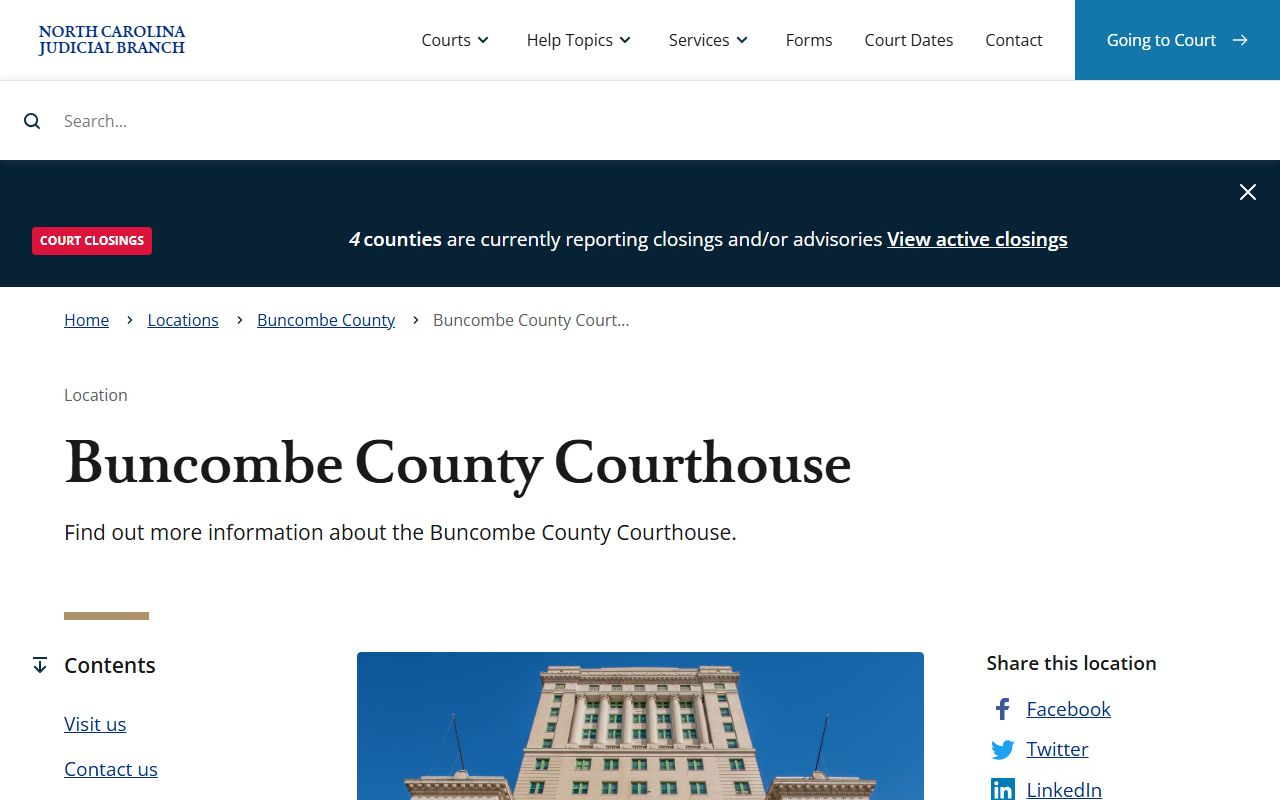
The Buncombe County Clerk of Superior Court manages all probate and estate administration for the county. The Estates Division in Asheville handles wills, estate cases, and guardianship filings. The courthouse is at 60 Court Plaza, Asheville, NC 28801. Call 828-259-3404 for the main office. The fax number is 828-259-3378.
Office hours are Monday through Friday from 8:00 AM to 5:00 PM. The clerk acts as the judge of probate for Buncombe County. This means the clerk decides if a will is valid and oversees the entire estate administration process. All cities and towns in the county file estate cases here, including Asheville, Black Mountain, Weaverville, Woodfin, Biltmore Forest, and Montreat.
The Register of Deeds has birth and death records from 1913, marriage records from 1850, and land records from 1763. These related records can be useful when working with Buncombe County probate court records.
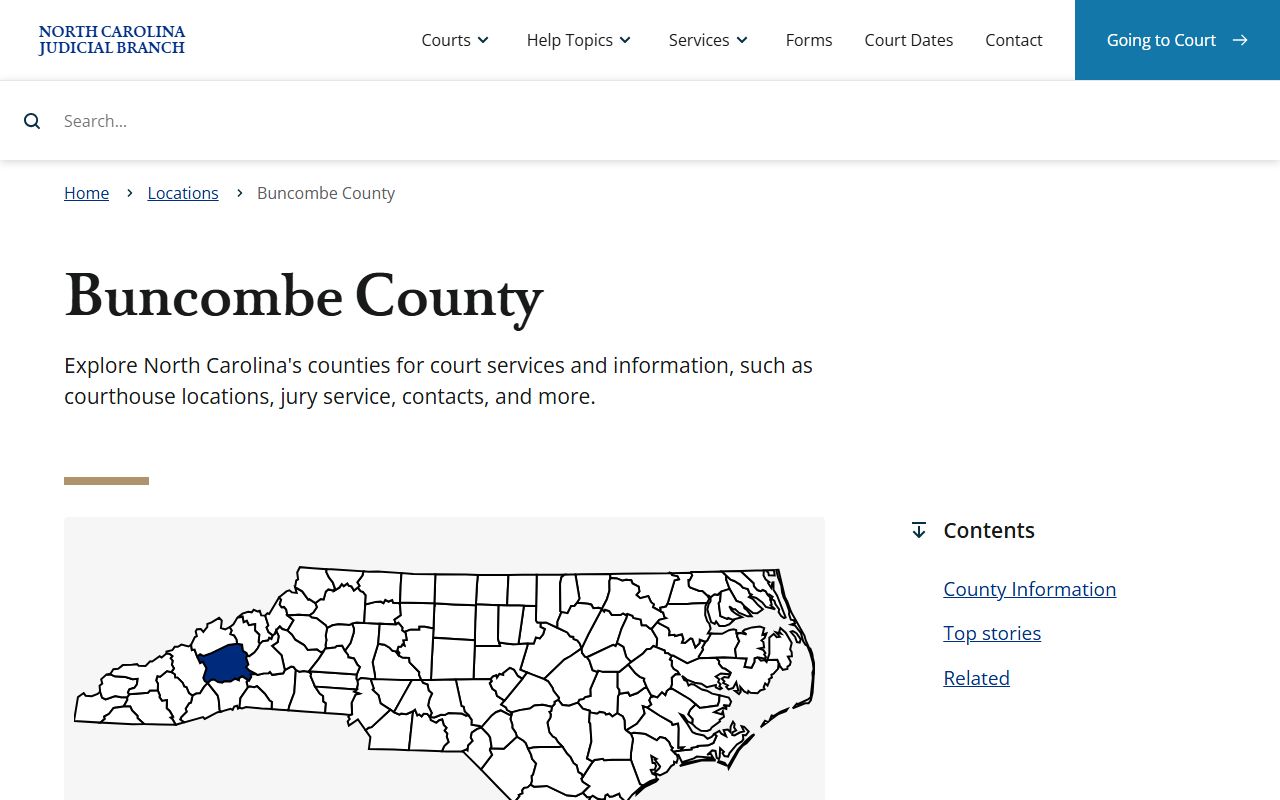
Visit the NC Courts Buncombe County page for more details.
| Court |
Buncombe County Clerk of Superior Court 60 Court Plaza Asheville, NC 28801 Phone: 828-259-3404 |
|---|---|
| Hours | Monday through Friday, 8:00 AM to 5:00 PM |
| Fax | 828-259-3378 |
| Website | nccourts.gov/locations/buncombe-county |
How to Search Buncombe County Probate Records
To search Buncombe County probate court records, visit the Estates Division at the courthouse in Asheville. Bring a photo ID. Give staff the name of the deceased and the approximate year of death. They can pull the estate file for you to review at the courthouse.
Online searches work through the NC eCourts portal. Enter a name or case number. Basic case data is free. Older Buncombe County probate court records may not be in the online system. For those, call 828-259-3404 or visit in person.
You can request certified copies at the clerk's window. They cost about $5 per page. Buncombe County probate court records are public under the North Carolina Public Records Act. Anyone may view them.
Note: Buncombe County handles a large volume of cases, so allow time for staff to locate older files.
Buncombe County Estate Filing Process
To open an estate in Buncombe County, bring the original will, a certified death certificate, and a description of all assets to the clerk's office. Fill out Form AOC-E-201, the Application for Probate. Pay the $120 filing fee. The proposed executor must appear in person to take an oath.
Bond may be required unless the will waives it or all heirs agree to skip it. After Letters Testamentary are issued, the executor publishes a Notice to Creditors in a local paper for four consecutive weeks. Under N.C.G.S. 28A-14-1, creditors then have 90 days to submit claims. An inventory of all assets is due within 90 days of the executor's qualification.
The executor files annual accounts with the Buncombe County clerk showing all income, expenses, and distributions. When the estate is fully settled, a final account is filed. The clerk reviews it and closes the case. Simple estates in Buncombe County take six to nine months. Average estates may take nine to fifteen months. Every step produces documents that become part of the Buncombe County probate court records.
Buncombe County Probate Court Fees
The filing fee for a Buncombe County estate is $120 under N.C.G.S. 7A-307. An estate administration fee of 0.4% of the gross estate value also applies, with a $6,000 cap.
Additional costs in Buncombe County include:
- Certified copies of Letters: about $5 each
- Publication of Notice to Creditors: $50 to $150
- Bond premium: depends on estate value
- Attorney fees: 2% to 4% of estate value
- Executor pay: up to 5% of receipts and disbursements
Call 828-259-3404 to confirm current fees before filing Buncombe County probate court records.
Small Estates in Buncombe County
A small estate affidavit may work if the personal property is $20,000 or less. The limit rises to $30,000 for a surviving spouse who is the sole heir. Wait at least 30 days after the death. File Form AOC-E-203B at the Buncombe County courthouse.
Bring a death certificate, the will if any, an asset list, and your ID. The fee is $120. This path skips the Notice to Creditors and annual accounts. It works well for simple cases with just bank accounts or vehicles. It does not cover real property. Given Asheville's real estate values, many Buncombe County estates involve property that requires full probate.
Buncombe County Historical Estate Files
Buncombe County was formed in 1791 from Burke and Rutherford counties. It once covered a much larger territory in western North Carolina. Many mountain counties were later carved from it. The clerk's office holds probate records from the early 1800s forward.
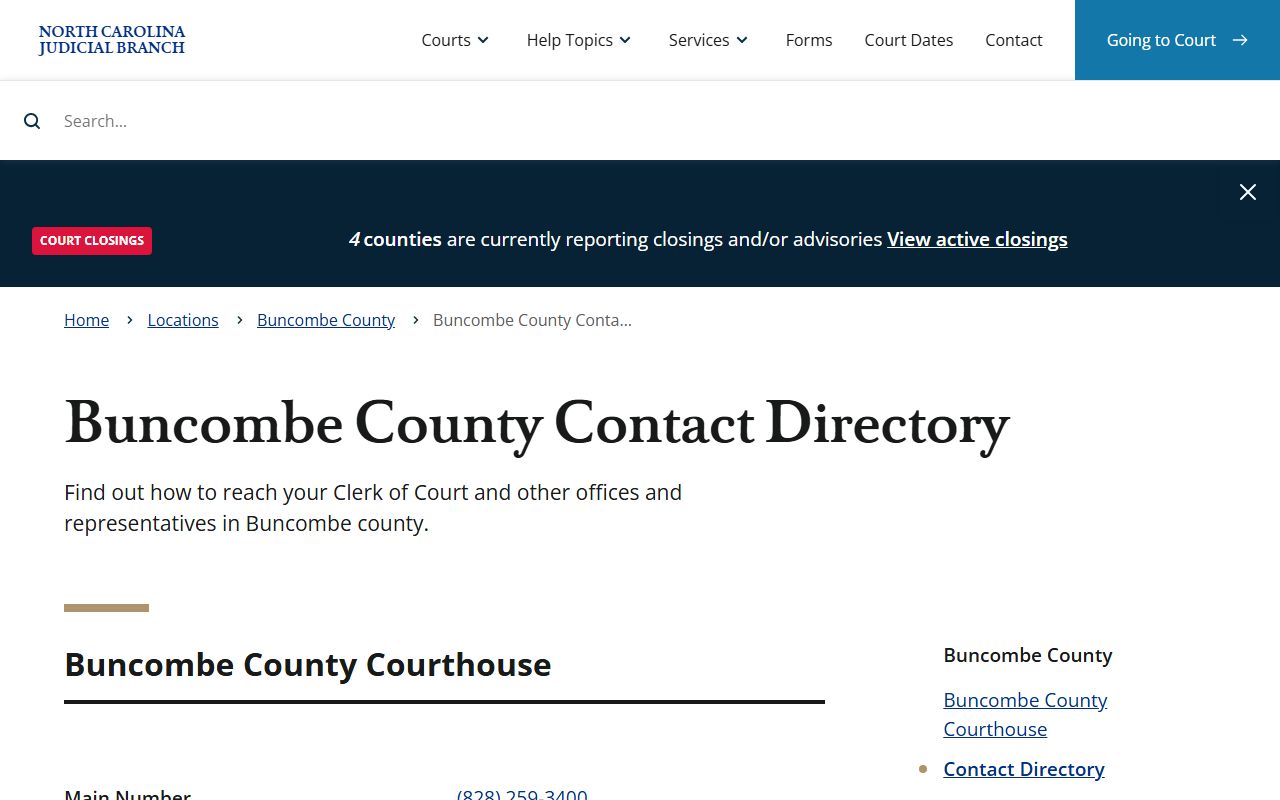
The North Carolina State Archives in Raleigh has microfilm of pre-1868 probate records from Buncombe County. For genealogy research, check both the local courthouse and the State Archives. The Register of Deeds in Buncombe County has land records from 1763, which can connect to estate matters. The Buncombe County contact directory lists all court departments.
Cities in Buncombe County
All cities and towns in Buncombe County file probate cases at the clerk's office in Asheville. The courthouse serves the entire county.
Other communities include Black Mountain, Weaverville, Woodfin, Biltmore Forest, and Montreat. All Buncombe County probate court records are filed at the Asheville courthouse.
Nearby Counties
These counties border Buncombe County in the western North Carolina mountains. File in the county where the person lived at the time of death.