
Cleveland County Estate Court Records
Cleveland County probate court records are managed by the Clerk of Superior Court in Shelby, the county seat. The Estates Division handles all filings related to wills, estate administration, guardianships, and related proceedings for the county. Cleveland County probate court records are public records available to anyone. You can search for specific cases, request copies of filed documents, and review estate files at the courthouse. The clerk staff can help you find what you need and explain the steps for opening a new estate or obtaining records from an existing case.
Cleveland County Quick Facts
Cleveland County Clerk of Superior Court
The Clerk of Superior Court in Cleveland County serves as the judge of probate. The office has jurisdiction over all estate proceedings, wills, guardianships, and estate administration. The courthouse is in Shelby, which serves the entire county. Cities and towns including Shelby, Kings Mountain, Boiling Springs, and Grover all file estate matters at this location.
The Estates Division in Shelby processes applications, issues letters, and maintains all estate case files. The office provides standard court forms and can walk you through each step of the process. Staff cannot offer legal advice, but they can explain procedures and filing requirements. The clerk keeps a complete record of every estate opened in Cleveland County.
The NC Courts website shows Cleveland County court information and services.
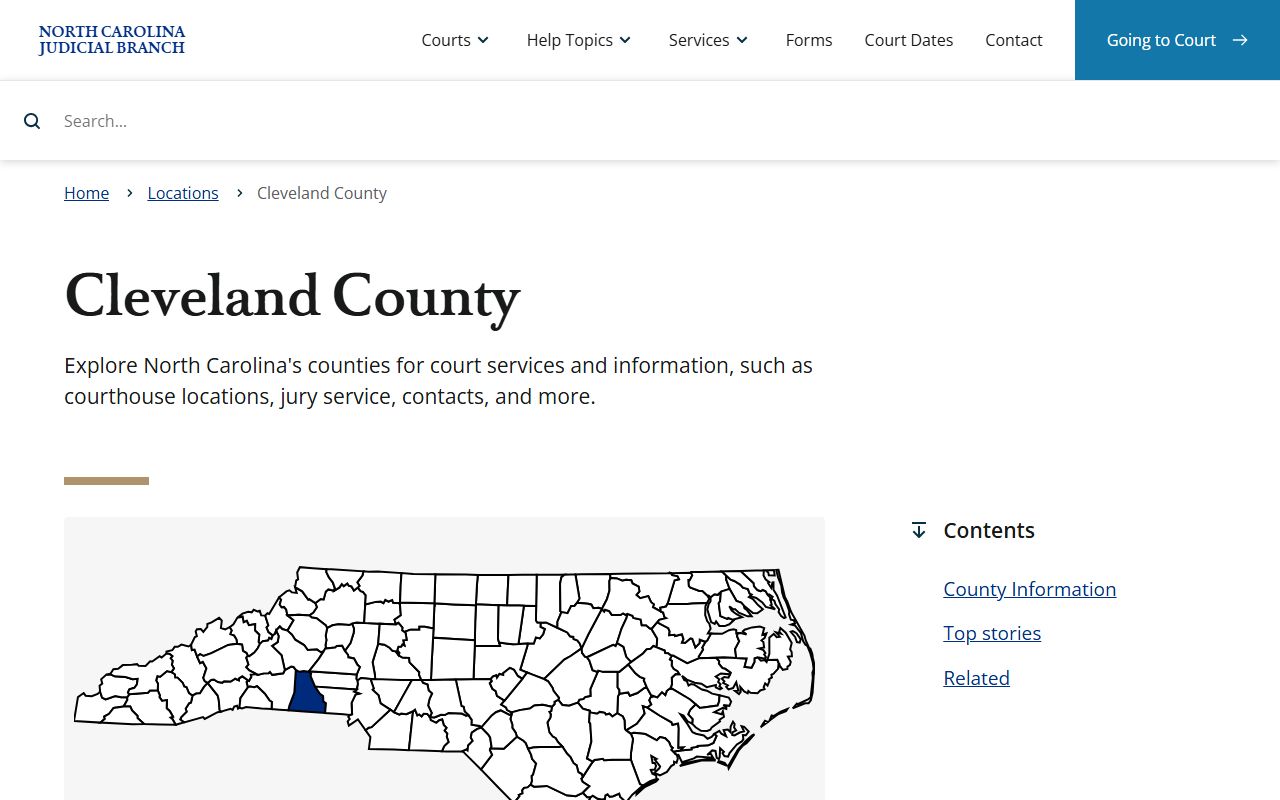
Review this page for an overview of court divisions in Cleveland County.
| Court |
Cleveland County Clerk of Superior Court Shelby, NC 28150 Phone: (704) 484-4900 |
|---|---|
| Hours | Monday through Friday, 8:00 AM to 5:00 PM |
| Website | nccourts.gov/locations/cleveland-county |
How to Search Cleveland County Probate Records
You can search for Cleveland County probate court records online or at the courthouse. The NC eCourts portal at nccourts.gov allows free searches by party name or case number. It shows basic case details. For document copies, contact the clerk office or go in person.
At the courthouse in Shelby, bring a valid photo ID. Staff can look up records by the deceased person's name, the personal representative, or the case number. You can review the case file and order copies. Certified copies are available for a fee.
The Cleveland County courthouse building page gives directions and access details.
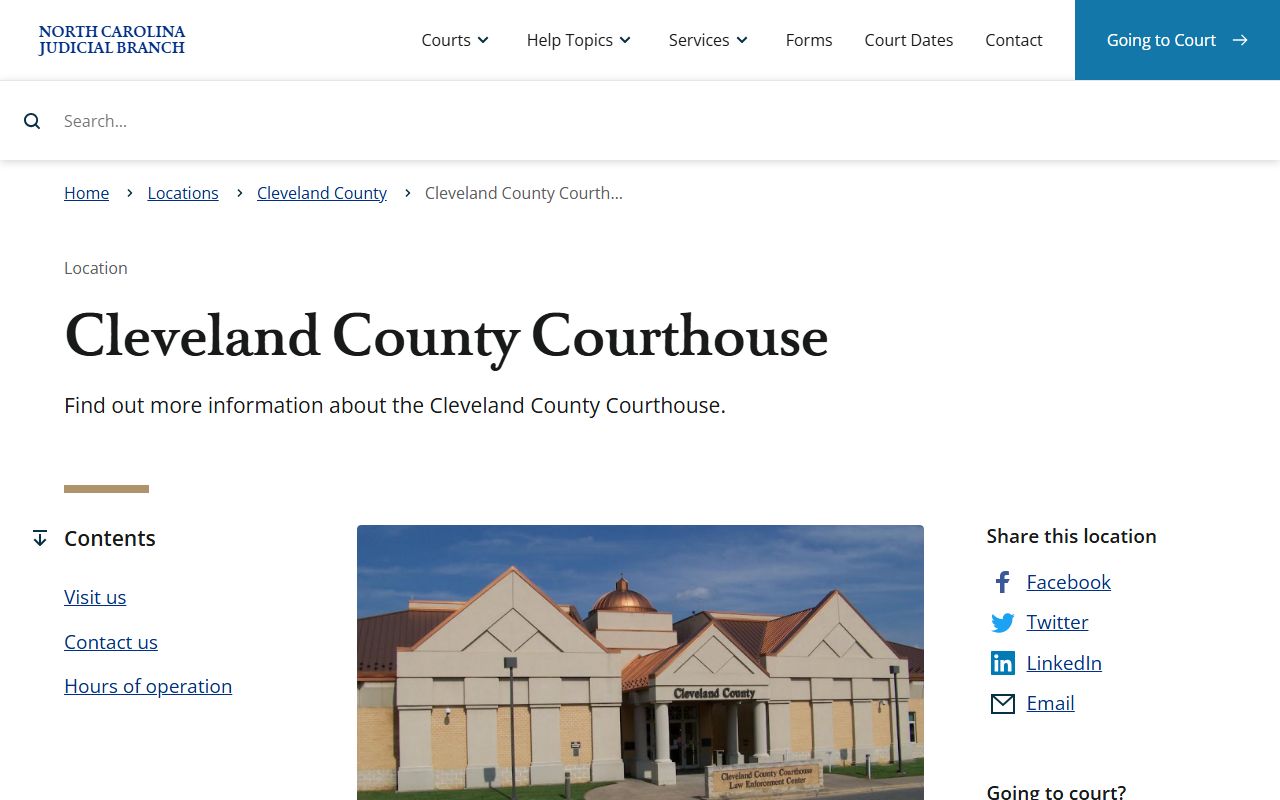
Check this page before visiting the courthouse in Shelby.
Note: Some older Cleveland County cases may not be in the online system. Visit the courthouse for the most complete results.
Cleveland County Estate Administration
Opening an estate in Cleveland County starts at the Clerk of Superior Court in Shelby. You need the original will, a certified death certificate, and information about the estate. The clerk uses Form AOC-E-201 for testate estates. Under N.C.G.S. Chapter 28A, the clerk handles estates for people who lived in Cleveland County.
The personal representative takes an oath and may post bond. After qualification, the clerk issues letters. The representative publishes a Notice to Creditors for four weeks. Creditors get 90 days to file claims. An inventory is due within 90 days of qualification.
The representative manages the estate until it is closed. This includes paying debts, filing tax returns, and distributing assets to heirs. Annual accounts are filed with the clerk. A final account closes the estate. Simple estates in Cleveland County usually take six to twelve months.
Note: The surviving spouse may claim a Year's Allowance of $60,000, which has priority over most creditor claims in North Carolina.
Cleveland County Probate Fees
Fees follow the state schedule under N.C.G.S. 7A-307. The filing fee is $120. The administration fee is 0.4% of gross estate value, capped at $6,000. Certified copies cost about $5 each.
Publication of the Notice to Creditors costs $50 to $150. Bond premiums vary by estate size. Attorney fees are typically 2% to 4% in the Cleveland County area. The personal representative may receive up to 5% of estate receipts as compensation.
Small Estates in Cleveland County
If the deceased person's personal property is $20,000 or less, heirs may use a small estate affidavit. The threshold is $30,000 for a surviving spouse who is the sole heir. This follows N.C.G.S. 28A-25-1.
File Form AOC-E-203B at the clerk office in Shelby. Bring a certified death certificate, photo ID, itemized asset list, and the original will if one exists. At least 30 days must have passed since the death. The filing fee is $120. Real estate is not covered by this process.
This simplified approach lets heirs collect bank funds, vehicles, and other personal property without the full probate timeline. If the deceased owned a home or land in Cleveland County, a full estate proceeding is still needed to handle the real property transfer through the courts.
Historical Cleveland County Probate Records
Cleveland County was formed in 1841 from Rutherford and Lincoln Counties. It is named for Benjamin Cleveland, a Revolutionary War colonel. Estate records date back to the 1840s. The courthouse in Shelby holds post-1868 records. Earlier records are available through the North Carolina State Archives on microfilm.
For genealogy, Cleveland County estate records list heirs, describe property, and document family connections. The FamilySearch wiki provides guidance on locating historical North Carolina probate records.
The Cleveland County contact directory lists staff who handle records.
Use this directory to reach the right staff member for your records search.
Cities in Cleveland County
Cleveland County includes Shelby, Kings Mountain, Boiling Springs, Grover, Waco, Lawndale, Kingstown, Lattimore, Mooresboro, Earl, Casar, Polkville, Fallston, and Belwood. All probate filings go through the Clerk of Superior Court in Shelby.
Nearby Counties
These counties border Cleveland County. Estate cases must be filed in the county where the deceased person lived.