
Duplin County Probate Court Records
Duplin County probate court records are maintained at the Clerk of Superior Court's office in Kenansville. The clerk stores wills, estate files, guardianship documents, and probate orders for all estates filed in the county. Duplin County has a long history of recordkeeping that stretches back to 1750. If you need to find a will, check on an estate, or get copies of probate documents, the Kenansville courthouse is where to go. You can also search some records through the state court system online.
Duplin County Quick Facts
Duplin County Clerk of Court
Jodi Cole-Shepard serves as the Clerk of Superior Court in Duplin County. The clerk acts as the judge of probate, with authority over wills, estate administration, and guardianship matters. The Estates Division helps people file new estates and provides access to existing probate court records.
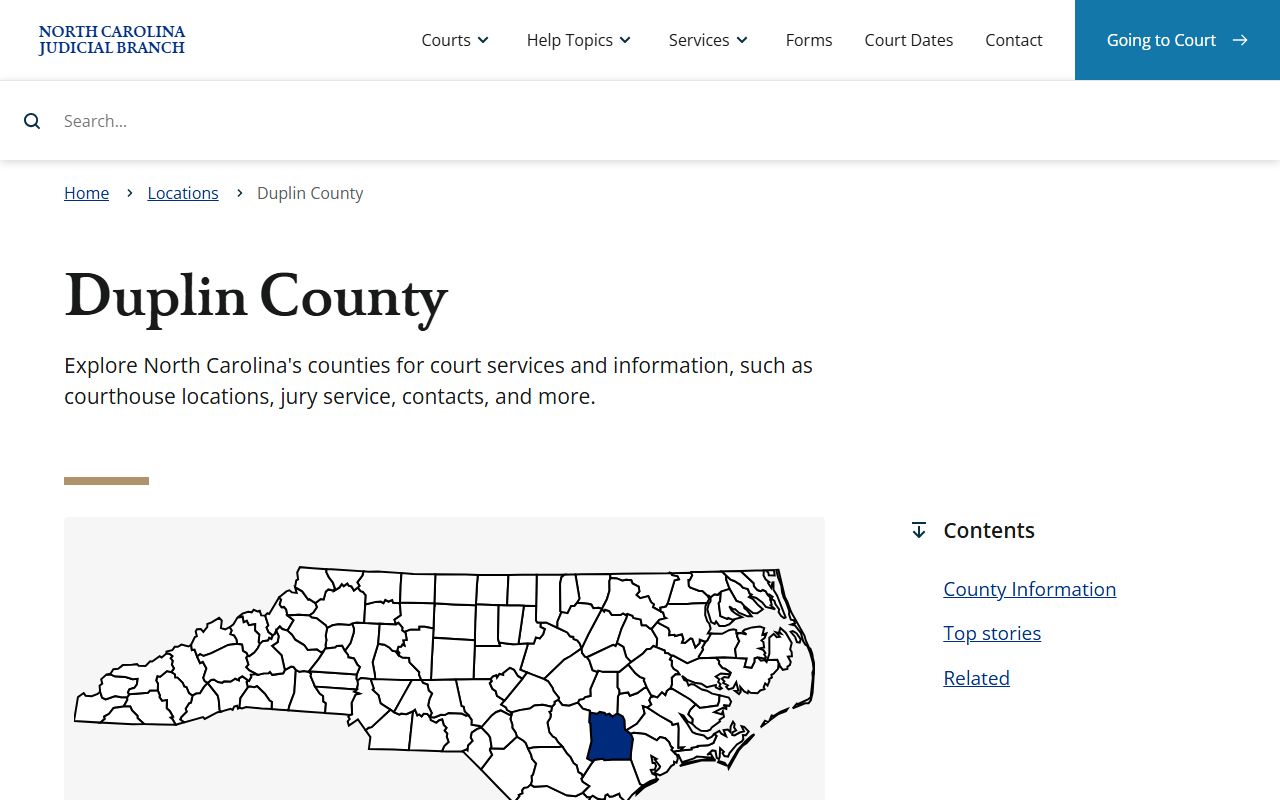
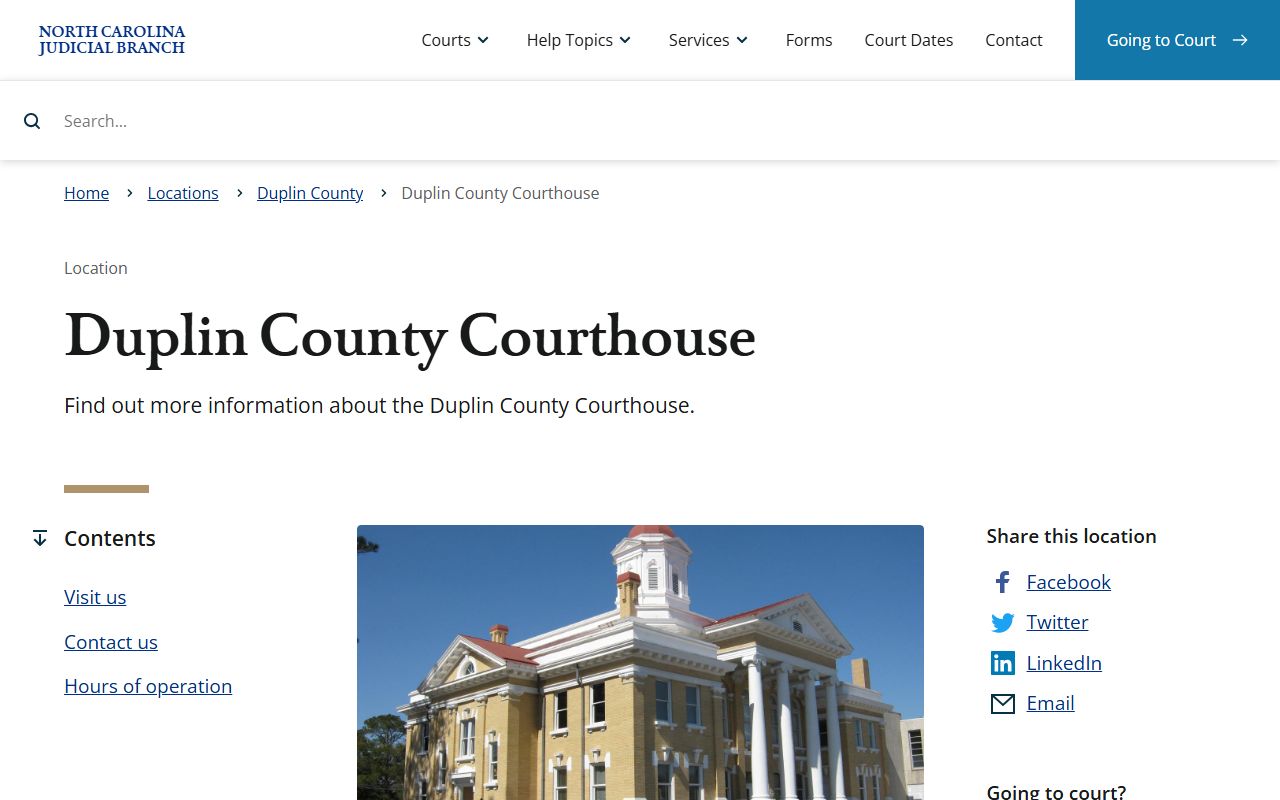
The courthouse sits in downtown Kenansville. All probate filings for Duplin County come through this office. Towns like Warsaw, Rose Hill, Wallace, and Beulaville are all served by this courthouse. The staff can assist with forms and give you information about what you need to bring. They handle estate matters every business day and keep all Duplin County probate court records at this location.
| Court |
Duplin County Clerk of Superior Court 112 W Hill St Kenansville, NC 28349 Phone: (910) 296-1686 |
|---|---|
| Hours | Monday through Friday, 8:30 AM to 5:00 PM |
| Website | nccourts.gov/locations/duplin-county |
Searching Duplin County Estate Records
You have two main options for searching Duplin County probate court records. You can visit the courthouse in person, or you can use the state's online court system. Each has its advantages depending on what you need.
The NC eCourts portal at nccourts.gov allows you to look up case records by name or case number. This works for recent cases. Basic case information is free to view online. For full documents or certified copies, you need to go to the clerk's office in Kenansville or submit a written request.
When you visit in person, bring your ID and the name of the deceased person. If you have a case number, that speeds things up. The clerk can search the index and pull the file for you. You may review it at the courthouse and order copies of what you need.
- Name of the deceased person
- Approximate date of death or year estate was filed
- Case number if available
Note: Duplin County has estate records going back to 1750, but very old records may take extra time to retrieve.
Estate Filing Process in Duplin County
When someone dies in Duplin County with a will, the will must be presented to the Clerk of Superior Court for probate. The person named as executor files an application using Form AOC-E-201. A certified death certificate and an estates action cover sheet are also required. The clerk reviews the will and, if valid, admits it to probate.
Under N.C.G.S. Chapter 28A, the clerk has full jurisdiction over estate proceedings. The executor takes an oath and may need to post a bond. Once qualified, the clerk issues letters testamentary. These give the executor legal authority to manage the estate. If there is no will, the clerk appoints an administrator under the rules of intestate succession.
The executor publishes a Notice to Creditors for four consecutive weeks. Creditors then have three months to submit claims. After all debts and taxes are settled, the executor distributes the remaining assets. A final account is filed with the clerk. Every step in this process creates a record that becomes part of the Duplin County probate court records file.
Duplin County Probate Costs
The cost to open an estate in Duplin County is $120. An estate administration fee of 0.4% of the gross estate value also applies, up to a cap of $6,000. These amounts come from N.C.G.S. 7A-307.
Other common costs include certified copies at about $5 each and newspaper publication fees between $50 and $150. Bond premiums run 0.5% to 1% of the bond amount per year. Attorney fees typically range from 2% to 4% of the estate value, and executor compensation can be up to 5% of receipts and disbursements.
Check with the clerk at (910) 296-1686 for the most current fee amounts before filing Duplin County probate court records.
Small Estate Affidavit for Duplin County
Duplin County allows small estates to bypass full probate. Under N.C.G.S. 28A-25-1, if the personal property is valued at $20,000 or less, an heir can use a small estate affidavit to collect assets. The threshold is $30,000 when the applicant is the surviving spouse and sole heir.
At least 30 days must pass after the death before you file. You need Form AOC-E-203B, a certified death certificate, a photo ID, and a list of assets with their values. The fee is $120. This method works for bank accounts, vehicles, and similar personal property. It does not apply to real estate.
Note: If the estate includes a house or land, you will need to go through the full probate process in Duplin County.
Historical Probate Records in Duplin County
Duplin County is one of the oldest counties in North Carolina. It was formed in 1750 from New Hanover County. The clerk's office has maintained estate records from that date. These early records include wills, bonds, inventories, and accounts that date to the colonial period.
The North Carolina State Archives in Raleigh holds microfilm copies of many of these older records. Researchers doing family history work can also check with the Duplin County Library or local historical societies. The courthouse has will books and estate papers going back centuries, which makes Duplin County a valuable resource for genealogy research.
Browse Nearby Counties
Duplin County shares borders with several other counties. If you are unsure where an estate was filed, check the address of the deceased person. North Carolina requires probate in the county where the person lived.