
Jones County Estate Court Records
Jones County probate court records are filed at the Clerk of Superior Court in Trenton. The clerk office maintains wills, estate inventories, letters of administration, and guardianship papers for all county residents. Searching probate court records in Jones County can help you settle an estate, verify inheritance rights, or trace your family tree. Jones County is one of the smallest counties in North Carolina by population, but its court records go back to the late 1700s.
Jones County Quick Facts
Jones County Clerk of Court
The Clerk of Superior Court in Jones County serves as the judge of probate. This office handles all estate filings, reviews wills, issues letters testamentary and letters of administration, and manages guardianship cases. Staff can help you locate and review probate court records.
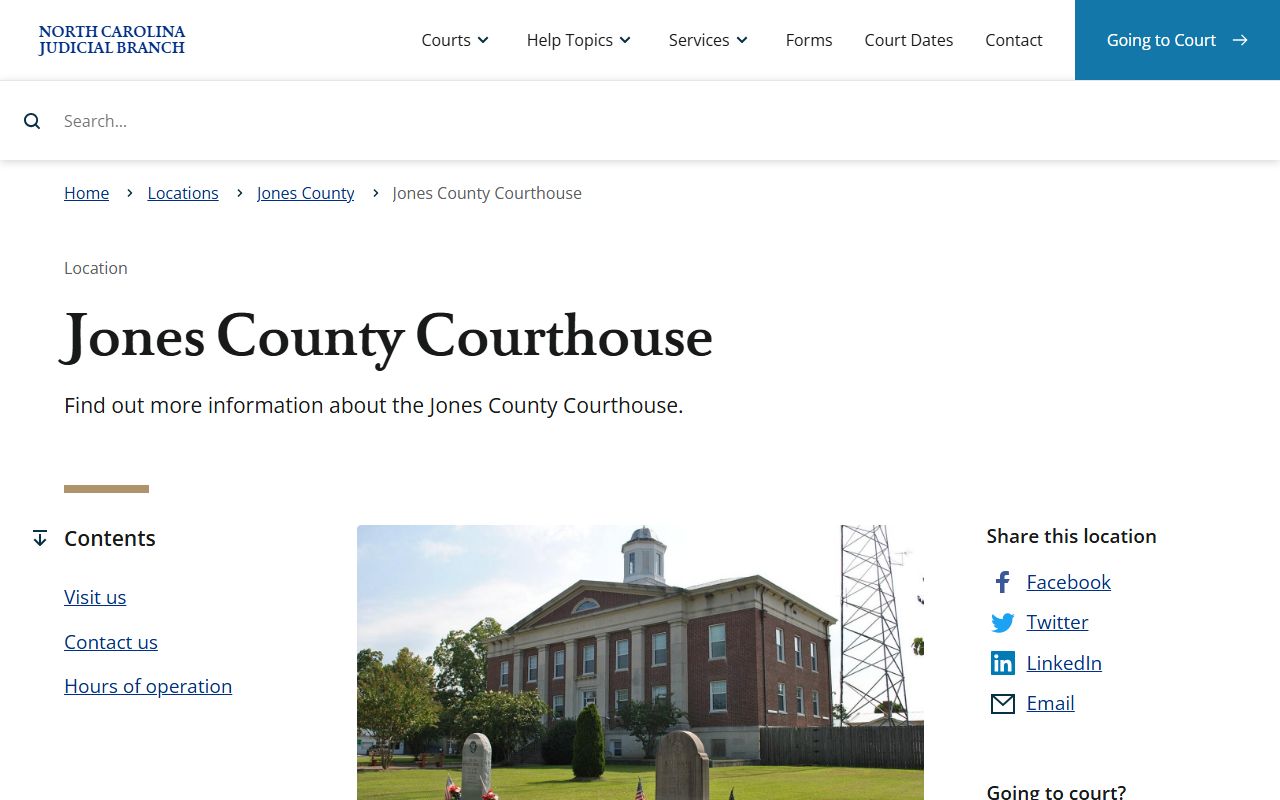
The Jones County courthouse is in Trenton. All probate filings for the county are processed here. The office is open Monday through Friday from 8:00 AM to 5:00 PM. Jones County has a small population, so the clerk office can often assist with requests promptly.
Learn more at the NC Judicial Branch website for Jones County.
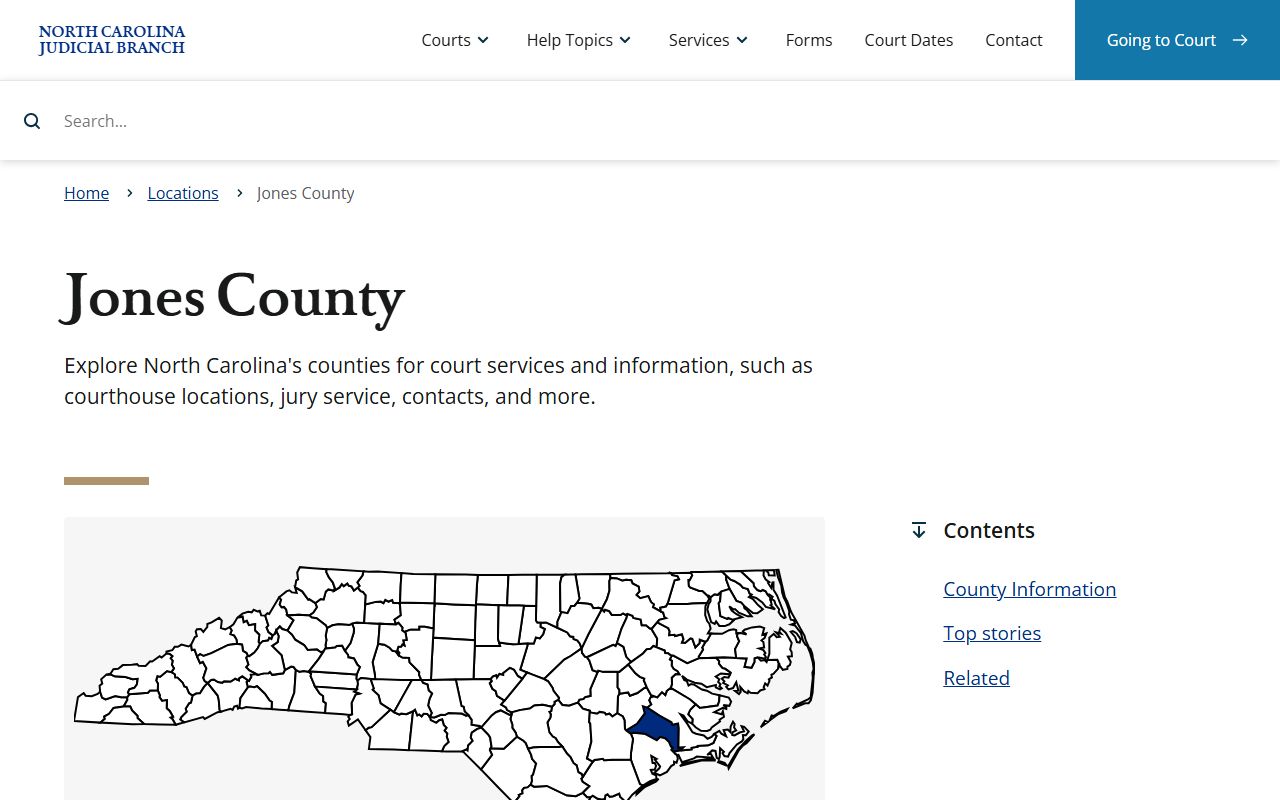
| Court |
Jones County Clerk of Superior Court Jones County Courthouse Trenton, NC 28585 Phone: (252) 448-7091 |
|---|---|
| Hours | Monday through Friday, 8:00 AM to 5:00 PM |
| Website | nccourts.gov/locations/jones-county |
Search Jones County Probate Court Records
You can search probate court records in Jones County online or by visiting the courthouse. The NC eCourts portal offers free case lookups by name or case number. Basic case details are available online, including filing dates and party names.
For full document access, visit the clerk office in Trenton. Staff will pull the estate file for you to review. You can order plain or certified copies. Bring identification and the name of the deceased person.
Useful information for searching includes:
- Full name of the deceased
- Approximate year of death
- Case number if available
Note: Jones County probate court records are public. You do not need to be related to the deceased to access them.
Estate Filing Process in Jones County
The estate process in Jones County follows North Carolina law under N.C.G.S. Chapter 28A. It begins with an application at the clerk office in Trenton.
When there is a will, the executor files the original along with a death certificate and Form AOC-E-201. The clerk admits the will and issues letters testamentary after the executor qualifies. Without a will, the clerk appoints an administrator who receives letters of administration.
Both executors and administrators must publish a Notice to Creditors in a newspaper, collect assets, pay valid debts, and distribute the remainder. The process creates a permanent set of probate court records at the Jones County courthouse.
Jones County's small size means that estate proceedings often move through the clerk office efficiently. However, complex estates or disputes can still take considerable time to resolve.
Jones County Probate Fees
Jones County charges the same probate fees as all North Carolina counties. Fees are set by N.C.G.S. 7A-307.
Standard fees include:
- Estate filing fee: $120.00
- Administration assessment: 0.4% of estate value, capped at $6,000
- Certified copies: approximately $5.00
- Creditor notice: $50 to $150
Confirm fees with the Jones County clerk before filing. Additional costs for bond and attorney services are separate.
Small Estate Option in Jones County
Jones County residents can use the small estate affidavit under N.C.G.S. 28A-25-1 when personal property is $20,000 or less. The threshold is $30,000 for a surviving spouse who is the sole heir. Wait 30 days after the death, then file Form AOC-E-203B with supporting documents. The fee is $120. Real property is not included.
This option creates a probate court record at the Jones County clerk office just like a full estate filing.
Historical Jones County Estate Records
Jones County was formed in 1779 from Craven County. It is named after Willie Jones, a political leader who opposed ratification of the United States Constitution. The county covers 474 square miles in the coastal plain of North Carolina.
Estate records from the county date to the late 1700s. The courthouse in Trenton holds post-1868 probate court records. Earlier records may be available at the North Carolina State Archives in Raleigh on microfilm. These include wills, inventories, and administration bonds.
Jones County's rural character and long history make its probate court records a useful resource for genealogy. Many families have lived in the area for generations, and estate records often connect relatives across time periods. Researchers can also check with the Craven County clerk for records of Jones County residents who died before 1779.
Jones County was formed in 1779 from Craven County. The county seat is Trenton. With a population of about 9,462, Jones County is one of the least populated counties in North Carolina. That small size has practical benefits for record searches. The clerk handles fewer filings each year. Wait times are short. Staff can give each visitor personal attention. The courthouse in Trenton stores all probate court records for the county in one location. No branch offices exist.
Older estate files may reference property along the Trent River. Agricultural land and timber were common assets. Wills from the 1800s often list crops, tools, and livestock in detail. These records help paint a picture of daily life in rural eastern North Carolina. Researchers studying Jones County probate court records can find information that census data alone does not capture. The clerk office can help identify which record books contain specific time periods.
Browse Nearby County Records
These counties surround Jones County. Check which county the deceased lived in before searching for probate court records.