
Martin County Estate Record Access
Martin County probate court records are kept at the Clerk of Superior Court in Williamston. The clerk office stores wills, estate inventories, letters testamentary, administration bonds, and guardianship papers for all Martin County residents. You can search these probate court records for estate settlement, title verification, or family history research. Martin County was formed in 1774, and its records provide over two hundred years of documented estate proceedings for the area.
Martin County Quick Facts
Martin County Clerk of Superior Court
The Clerk of Superior Court in Martin County acts as the judge of probate. This office manages all estate filings, reviews wills for admission to probate, and issues letters testamentary and letters of administration. Staff maintain probate court records and provide public access during business hours.
The Martin County courthouse is in Williamston. All estate matters for residents of Williamston, Robersonville, Jamesville, and other Martin County towns are filed at this location. The office is open Monday through Friday.
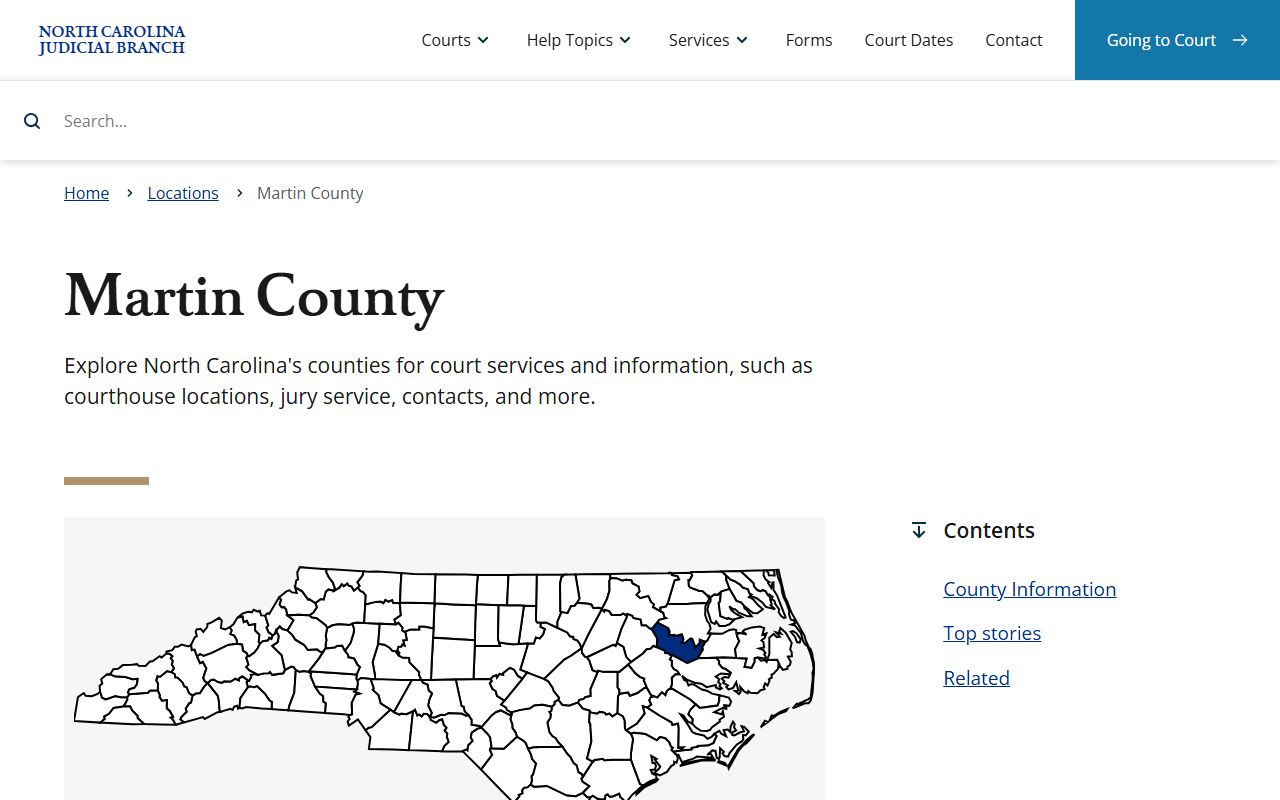
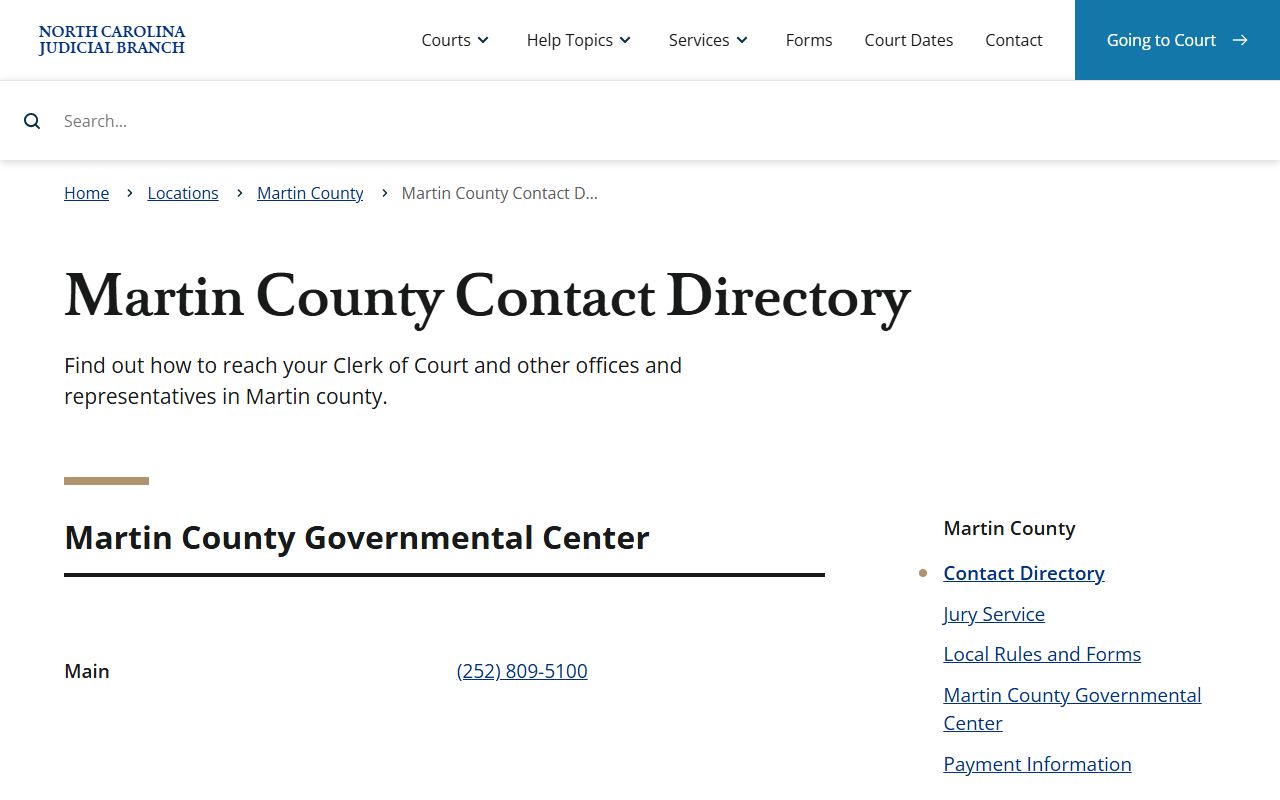
Get court details at the NC Judicial Branch website for Martin County.
| Court |
Martin County Clerk of Superior Court Martin County Courthouse Williamston, NC 27892 Phone: (252) 789-4400 |
|---|---|
| Hours | Monday through Friday, 8:00 AM to 5:00 PM |
| Website | nccourts.gov/locations/martin-county |
Search Martin County Probate Court Records
Probate court records in Martin County can be searched online or at the courthouse. The NC eCourts portal offers free case lookups by party name or case number. You can view basic case details such as filing dates and party information.
For complete estate files, visit the clerk office in Williamston. Staff will pull the record for you to review. You can order copies, including certified copies for legal use. Bring identification and any details you have about the estate.
Helpful search information:
- Full name of the deceased
- Year of death or approximate filing year
- Case number if known
Martin County probate court records are public records under N.C.G.S. Chapter 132. Access is available to anyone.
Martin County Estate Filing Process
Opening an estate in Martin County follows North Carolina law under N.C.G.S. Chapter 28A. The clerk handles all estate proceedings in the county.
With a will, the executor files the original document, a death certificate, and Form AOC-E-201. The clerk admits the will to probate. The executor qualifies by taking an oath and posting bond if needed. Letters testamentary are issued. Without a will, an administrator is appointed and receives letters of administration.
The representative must publish notice, collect assets, pay debts and taxes, and distribute the remaining estate. Each step creates probate court records stored permanently at the Martin County courthouse.
Note: Martin County's small population means the clerk office can often process straightforward estate matters efficiently.
Martin County Probate Court Fees
Martin County uses the standard North Carolina fee schedule under N.C.G.S. 7A-307.
Common fees include:
- Estate opening fee: $120.00
- Administration assessment: 0.4% of estate value, up to $6,000
- Certified copies: approximately $5.00
- Notice to Creditors: $50 to $150
Call the Martin County clerk to confirm current fees. Bond and attorney costs are additional.
Small Estate Process in Martin County
Martin County residents can use the small estate affidavit under N.C.G.S. 28A-25-1 when personal property is $20,000 or less. The limit rises to $30,000 for a surviving spouse who is the sole heir. Wait 30 days after the death. File Form AOC-E-203B with a death certificate, asset list, and photo ID. The fee is $120.
Real property is not covered by this process. The affidavit becomes a probate court record at the Martin County clerk office.
Historical Martin County Probate Records
Martin County was formed in 1774 from Halifax County and Tyrrell County. It is named after Josiah Martin, the last colonial governor of North Carolina. The county covers 457 square miles in the Inner Coastal Plain region. Williamston has served as the county seat since the county's founding.
Estate records from Martin County date back to the Revolutionary War era. The courthouse in Williamston holds post-1868 probate court records. Earlier records are available at the North Carolina State Archives in Raleigh on microfilm. These include wills, estate inventories, administration bonds, and guardianship papers.
Martin County's agricultural roots are evident in its historical probate court records, which often describe farmland, livestock, and personal property of early residents. These records are valuable for genealogists tracing families in the Roanoke River corridor of eastern North Carolina.
Martin County was formed in 1774 from Halifax County and Tyrrell County. The county seat is Williamston. The population is about 21,523. The Roanoke River runs through the county. Early settlers farmed the fertile bottomlands along the river. Their wills and estate inventories describe that landscape in detail. Tobacco, corn, and timber appear frequently in older probate court records from the county.
Williamston is the largest town. Robersonville and Jamesville also fall within the county. All residents use the single courthouse in Williamston for estate filings. The clerk office is small but experienced. Staff handle estate cases regularly and can guide you through the record search process. Phone the office at (252) 789-4400 for basic questions. Walk-in visits work best for reviewing full estate files. The courthouse has standard business hours five days a week. Martin County probate court records are public and open to all requestors.
Browse Nearby County Records
These counties surround Martin County. Verify the deceased person's address before searching for probate court records. Estate cases must be filed in the county of residence.