
Find Pitt County Probate Records
Pitt County probate court records are managed by the Clerk of Superior Court in Greenville. The Estates Division processes all wills, estate filings, and guardianship cases for the county. Searching for probate court records in Pitt County starts at the courthouse or through the state online portal. The county was formed in 1760 from Beaufort County and named after William Pitt, the British Prime Minister. With about 180,783 residents and 656 square miles, Pitt County is one of the larger counties in eastern North Carolina. Greenville serves as both the county seat and the region's main hub for health care and education.
Pitt County Quick Facts
Pitt County Clerk of Superior Court
The Pitt County Clerk of Superior Court serves as the judge of probate for the county. The Estates Division in Greenville handles all probate court records, including the probate of wills, letters testamentary, letters of administration, guardianships, and conservatorships. The clerk maintains complete records of every estate filing.
Pitt County also has an additional court site at the Farmville Courthouse, located in the Farmville Municipal Building. However, estate matters are handled at the main courthouse in Greenville. The Pitt County Clerk's Office opens to the public from 8:30 AM to 5:00 PM Monday through Friday, while the courthouse building itself is open from 8:00 AM to 5:00 PM.
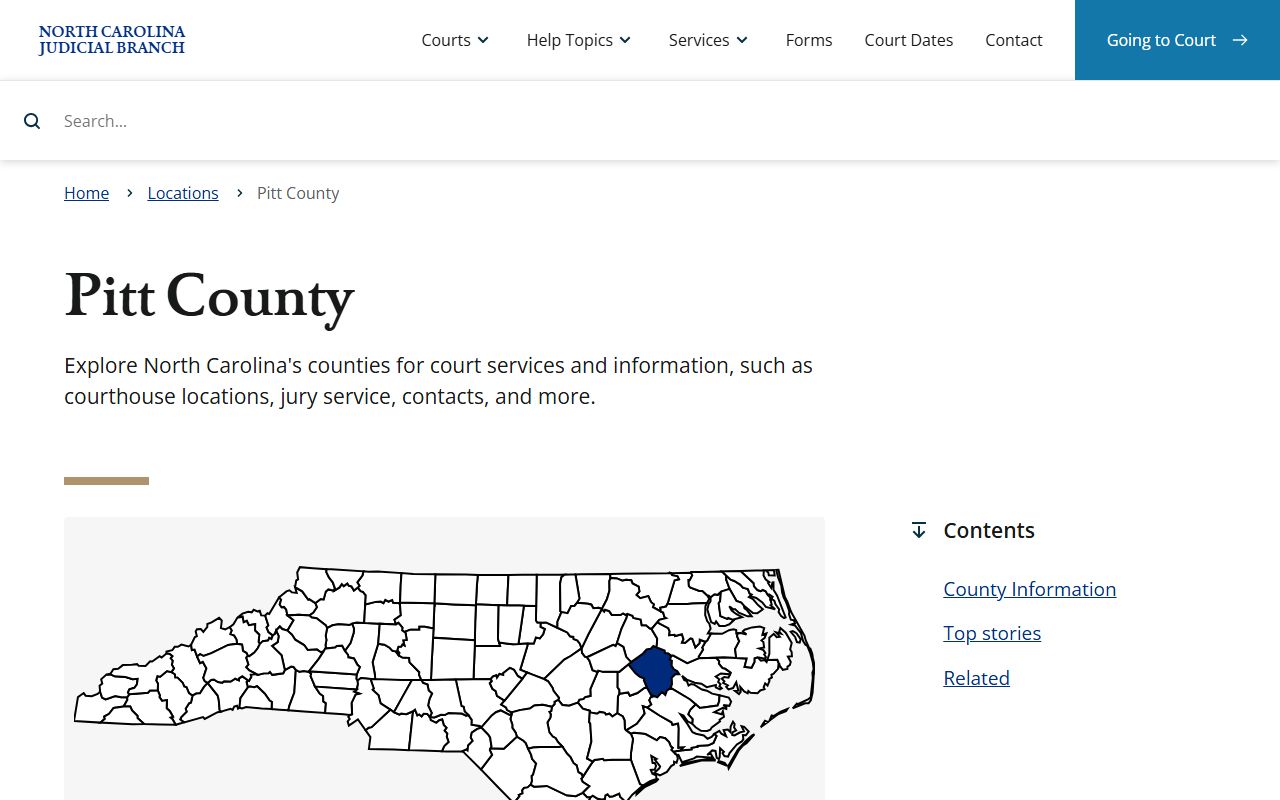
The Pitt County court page on the NC Judicial Branch website provides full contact details.
Call the clerk to confirm what you need before visiting the courthouse in Greenville.
| Court |
Pitt County Clerk of Superior Court PO Box 6067 Greenville, NC 27835 Phone: (252) 695-7100 |
|---|---|
| Hours | Clerk's Office: Monday through Friday, 8:30 AM to 5:00 PM Courthouse: Monday through Friday, 8:00 AM to 5:00 PM |
| Website | nccourts.gov/locations/pitt-county |
Search Pitt County Probate Court Records
There are two ways to find probate court records in Pitt County. You can use the online system or go to the courthouse in Greenville. Both give you access to estate case information, but each has its own advantages.
The NC eCourts portal lets you search case records across all counties by party name or case number. For Pitt County, you can see basic case details like filing dates and case status at no charge. Full documents and certified copies must be obtained from the clerk.
For in-person searches, visit the courthouse in Greenville during the Clerk's Office hours of 8:30 AM to 5:00 PM. Bring your photo ID. Staff can look up records by name or case number and pull the file for you to review. You can order plain or certified copies while you are there.
Have these details ready before you search:
- Full name of the deceased person
- Year the estate was opened or year of death
- Case number if available
- Relationship to the deceased if requesting certified copies
Note: The Farmville Courthouse location handles some court matters for Pitt County but estate filings are managed at the main Greenville courthouse.
Estate Administration in Pitt County
Opening an estate in Pitt County follows North Carolina's standard process. The first step is filing an application at the Clerk of Superior Court in Greenville. For testate estates, submit Form AOC-E-201 with the original will, certified death certificate, and information about all heirs or beneficiaries.
The clerk reviews the filing and qualifies the personal representative. This person takes an oath at the courthouse and may need to post a bond. Once qualified, the representative has 90 days to file an inventory of all assets with the Pitt County clerk.
A Notice to Creditors must run in a local newspaper for four straight weeks. After the creditor period ends and debts are paid, the remaining assets go to the beneficiaries. The personal representative files a final accounting with the court and asks to be discharged.
The typical timeline in Pitt County is 6 to 9 months for simple estates. Average estates take 9 to 15 months. Complex or contested cases can stretch to several years. A surviving spouse can petition for a Year's Allowance of $60,000, which takes priority over most claims against the estate.
Pitt County Estate Court Fees
Filing fees in Pitt County follow the state fee schedule. The application fee is $120. The estate administration fee is 0.4% of the probate value, capped at $6,000. These amounts are set by N.C. Gen. Stat. 7A-307 and apply across all North Carolina counties.
Other costs tied to Pitt County probate court records include:
- Certified copies of Letters: about $5 per copy
- Notice to Creditors in a local paper: $50 to $150
- Bond premium: varies by estate value
- Attorney fees: 2% to 4% of estate value is typical
- Executor compensation: up to 5% of receipts and disbursements
These costs come from the estate, not from the personal representative's own funds. Low-income filers may ask the Pitt County clerk about a fee waiver by filing a Petition to Proceed as an Indigent.
Small Estate Affidavit in Pitt County
North Carolina provides a short path for small estates. If the person's personal property totals $20,000 or less, you can skip full probate and file a small estate affidavit instead. The limit goes to $30,000 when the surviving spouse is the sole heir and applicant.
You must wait 30 days after the date of death before filing. Use Form AOC-E-203B, which you can download from the NC Judicial Branch forms page. Bring it to the Pitt County Clerk of Superior Court in Greenville along with a certified death certificate, the original will if there is one, a list of assets with values, and your photo ID. The filing fee is $120.
Note: This method does not work when real property must be sold within two years. In those cases, full estate administration is needed in Pitt County.
Historical Probate Records in Pitt County
Pitt County has a long record history that dates to 1760 when it was formed from Beaufort County. The courthouse in Greenville holds probate court records from 1868 to the present. For older records, the NC State Archives in Raleigh maintains microfilm of wills, estate inventories, and related documents from the colonial and antebellum periods.
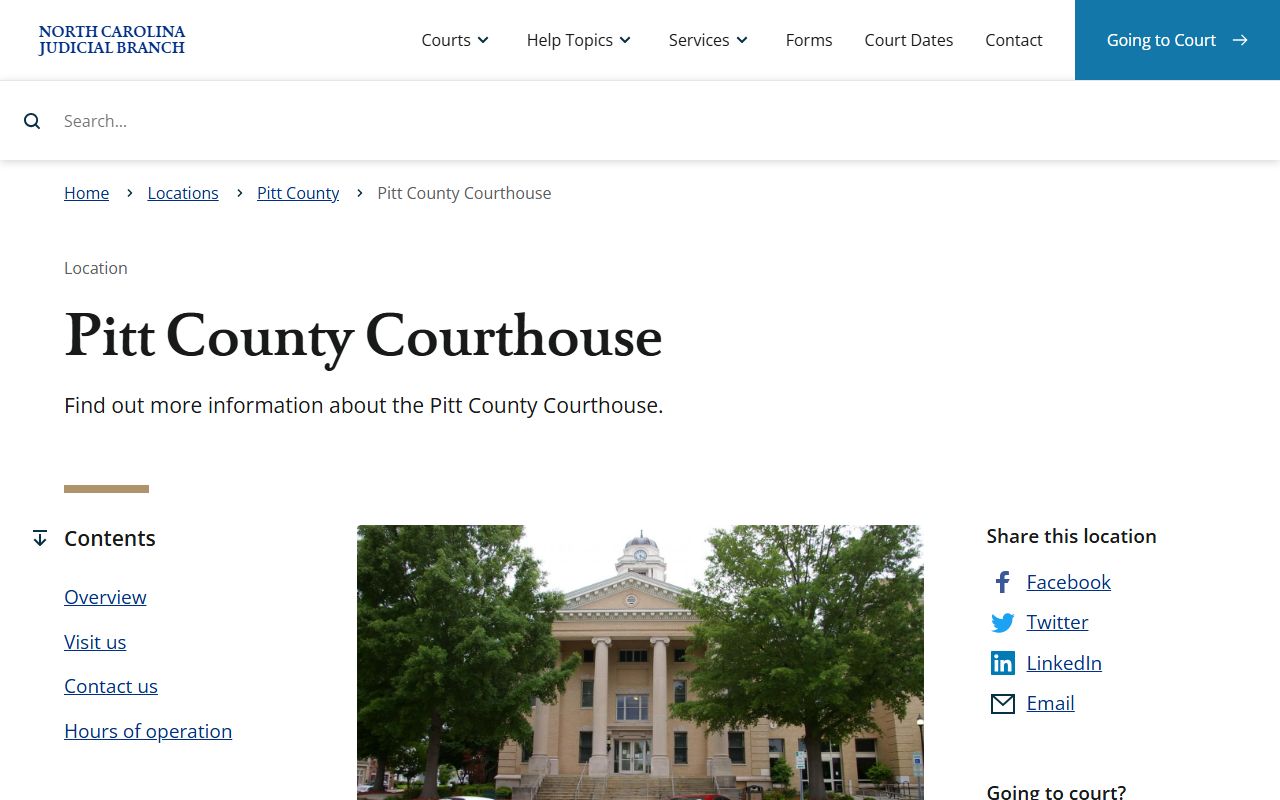
The Pitt County courthouse information page on the NC Judicial Branch site shows building details and access hours.
Records from before 1760 may be found under Beaufort County in the Secretary of State Papers at the State Archives.
For family history research in Pitt County, probate court records are one of the best sources. Wills name heirs and often describe property. Estate inventories list personal goods. Guardianship records show family relationships. Together, these documents give a detailed look at Pitt County families going back over 250 years.
Browse Nearby Counties
These counties are near Pitt County. If the person whose estate you need lived across the county line, you will need to search there instead. Probate court records are always filed where the person resided at death.