
Montgomery County Probate Records
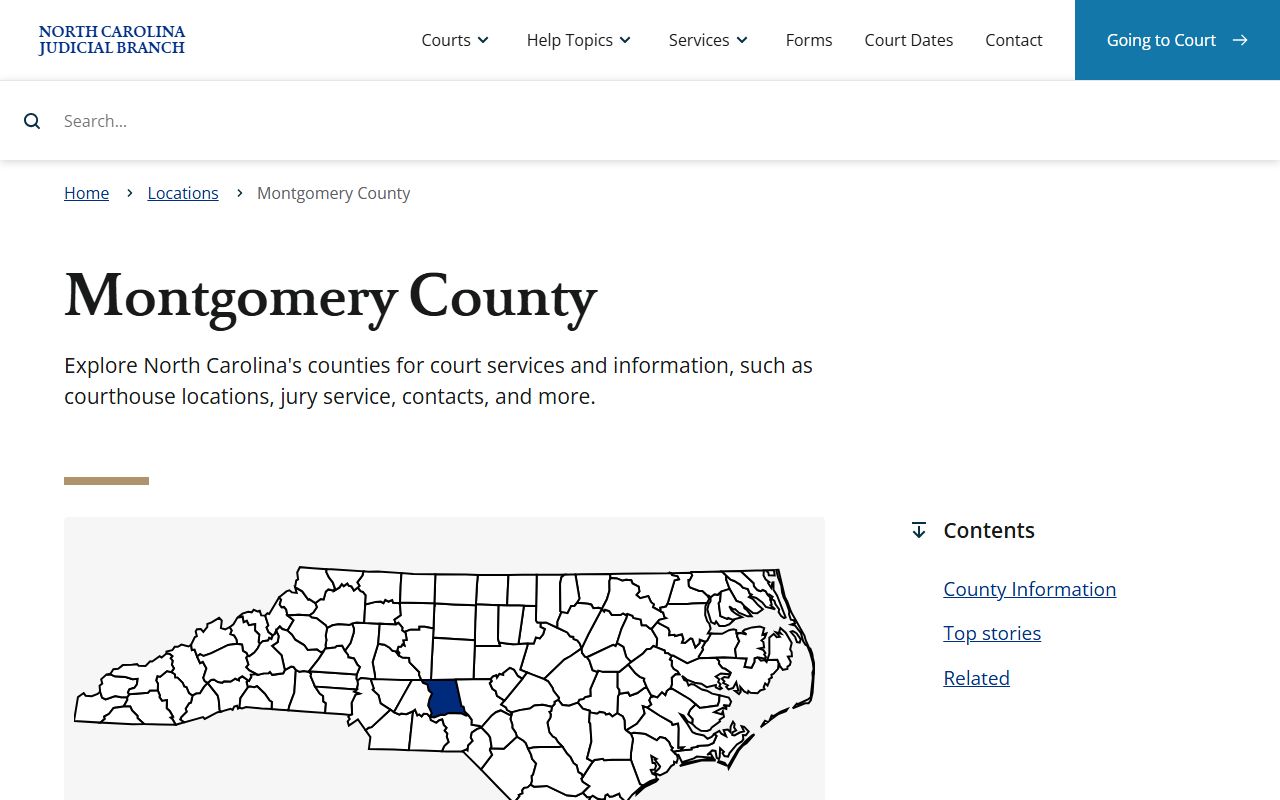
Montgomery County probate court records are filed and stored at the courthouse in Troy, the county seat. The Clerk of Superior Court oversees all estate matters for the county, which sits in the central Piedmont region of North Carolina. With a population of about 26,000, Montgomery County is a rural county where the clerk's office handles wills, estate administration, and guardianship proceedings. You can search these probate court records in person or request information by phone during business hours.
Montgomery County Quick Facts
Montgomery County Clerk of Court
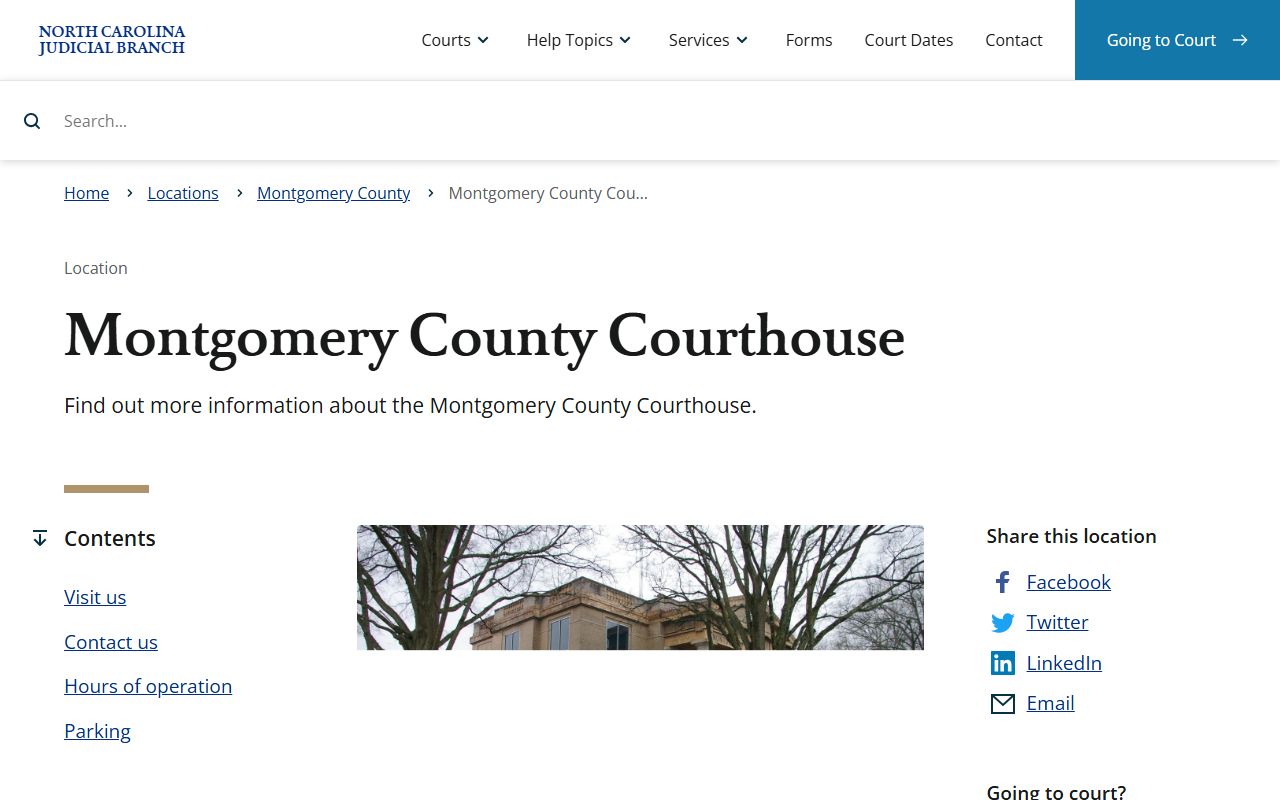
The Montgomery County Clerk of Superior Court serves as the judge of probate for the county. This office processes all estate filings, validates wills, issues letters testamentary, and handles guardianship cases. The courthouse in Troy is where all probate court records are maintained and made available to the public.
Montgomery County was formed in 1779 from Anson County. It was named after Richard Montgomery, a major general in the Revolutionary War who died at the Battle of Quebec in 1775. The county covers 502 square miles of rolling Piedmont hills and Uwharrie Mountain forests. Troy sits near the center of the county and serves as the hub for all court business, including estate matters. All residents of Montgomery County file probate court records at this location.
The NC Judicial Branch website at nccourts.gov/locations/montgomery-county provides the latest contact details for the Montgomery County courthouse.
| Court |
Montgomery County Clerk of Superior Court Montgomery County Courthouse Troy, NC Phone: Check nccourts.gov for current number |
|---|---|
| Hours | Monday through Friday, 8:30 AM to 5:00 PM |
| Website | nccourts.gov/locations/montgomery-county |
Searching Montgomery County Estate Records
The best way to search probate court records in Montgomery County is to visit the courthouse in Troy. Walk into the Clerk of Superior Court office during business hours and ask staff to look up a case. They can search by the name of the deceased person or by case number. Bring a valid photo ID. Staff can tell you what is on file and provide copies of the documents you need.
Online searches are also possible through the North Carolina eCourts system. Visit nccourts.gov and use the case search tool. Enter a party name or case number to find records. The online portal shows basic case details for free. For copies of actual documents from the probate court records, contact the Montgomery County clerk.
You can also call the clerk's office to ask about a specific estate case. Staff can confirm if a case exists and what documents are on file. This saves a trip to Troy if you are coming from another part of the county or out of state.
Note: Montgomery County is a smaller county, so the courthouse staff can often provide personal attention when you come in to search probate court records.
Estate Process in Montgomery County
Opening an estate in Montgomery County starts at the clerk's office in Troy. Bring the original will and a certified death certificate. The clerk reviews the documents and begins the probate process. Without a will, the estate is treated as intestate and the clerk appoints an administrator. The personal representative must appear in person to take an oath before the clerk can issue letters.
After the representative qualifies, they must publish a Notice to Creditors in a Montgomery County newspaper for four consecutive weeks. Creditors have 90 days from the first publication to file claims. The representative must also file an asset inventory within 90 days of qualification. Annual accounts must be filed with the clerk showing all receipts and payments made on behalf of the estate. These filings are part of the Montgomery County probate court records.
The surviving spouse may claim a Year's Allowance of $60,000, which takes priority over most debts. An elective share of 3% to 50% of net assets is also available under N.C.G.S. 30-3.1, depending on marriage length. That election must be filed within six months. Once all debts are paid and the creditor period has passed, assets are distributed to beneficiaries. The representative files a final account with the Montgomery County clerk, and the estate closes.
Montgomery County Probate Court Fees
Montgomery County uses the North Carolina statewide fee schedule for all probate court records and estate matters. Fees are collected by the Clerk of Superior Court when you file.
Current fees for estate cases in Montgomery County include:
- Estate filing application: $120
- Administration fee: 0.4% of probate value, capped at $6,000
- Certified copies of letters: approximately $5 each
- Notice to Creditors publication: $50 to $150
- Bond premium: varies by estate size
Bond is required unless waived in the will or by all heirs. Low-income filers may seek a fee waiver through the court. Confirm all fees with the Montgomery County clerk before filing, as amounts can change.
Small Estate Filing in Montgomery County
Montgomery County residents may use the small estate affidavit process for modest estates. This is a quicker route than full probate and creates fewer probate court records.
The Collection by Affidavit is available when personal property is $20,000 or less, or $30,000 if the surviving spouse is the sole heir. At least 30 days must pass after the death before filing. The process does not apply when real property needs to be sold within two years. File Form AOC-E-203B with the Montgomery County clerk along with a death certificate, the original will if one exists, asset details, photo ID, and the $120 fee.
Note: Even with the small estate process, all filings become part of the Montgomery County probate court records and are available to the public.
Historical Estate Records in Montgomery County
Montgomery County has some of the older probate court records in the Piedmont region. Founded in 1779 from Anson County, the courthouse in Troy has maintained estate records for well over two centuries. Early records include wills, inventories of personal property, administration bonds, and guardianship papers. These documents are valuable for genealogy research and family history work.
For records that date before 1779, check Anson County, which is the parent county. The North Carolina State Archives in Raleigh holds microfilm copies of many early estate records from Montgomery County and surrounding counties. Pre-1868 records are also available in the State Archives' Reading Room. Researchers can visit archives.ncdcr.gov to plan a visit or request information by mail.
The Uwharrie National Forest covers a large section of Montgomery County. Historical probate court records from the area sometimes include references to timber rights, gold mining claims, and farmland that reflect the economic history of the Uwharrie region.
Browse Nearby Counties
These counties border Montgomery County. Confirm the county of domicile for the deceased before filing. Probate court records must go through the correct county clerk for the case to be valid.