
Access Moore County Estate Documents
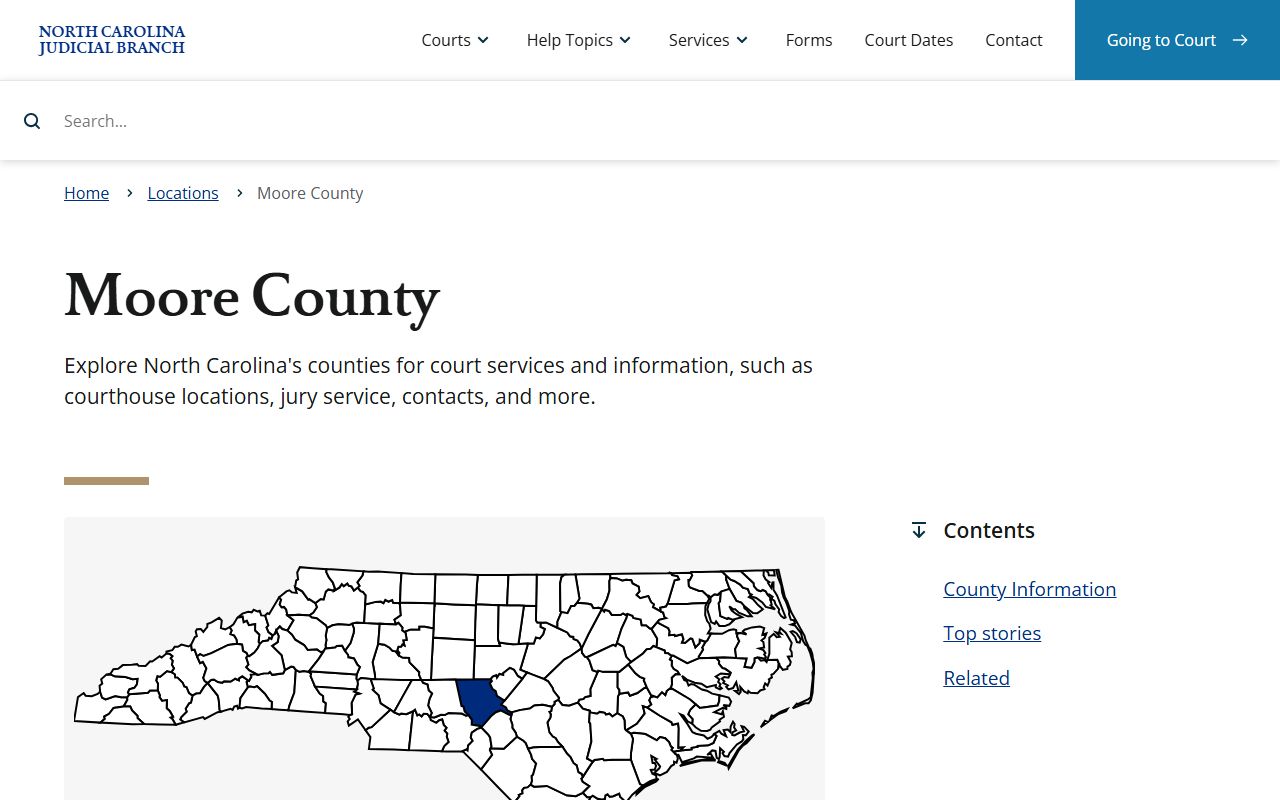
Moore County probate court records are managed by the Clerk of Superior Court in Carthage. The county is in the Sandhills region of central North Carolina, home to Pinehurst and Southern Pines. With over 108,000 residents, Moore County sees a steady volume of estate cases each year. The Estates Division in Carthage handles wills, estate administration, and guardianship proceedings. You can search probate court records in person at the courthouse or through online tools provided by the state court system.
Moore County Quick Facts
Moore County Clerk of Superior Court
The Moore County Clerk of Superior Court serves as the judge of probate for the county. The Estates Division in Carthage processes all estate filings, validates wills, issues letters testamentary and letters of administration, and handles guardianship cases. The courthouse is the sole place to file probate court records in Moore County.
Moore County was formed in 1784 from Cumberland County. It was named after Alfred Moore, a captain in the Revolutionary War who later served as a justice of the Supreme Court of the United States. The county covers 706 square miles, making it one of the larger counties in the state by area. Carthage sits in the northern part of the county, while Pinehurst and Southern Pines are to the south. All municipalities file estate matters at the Carthage courthouse.
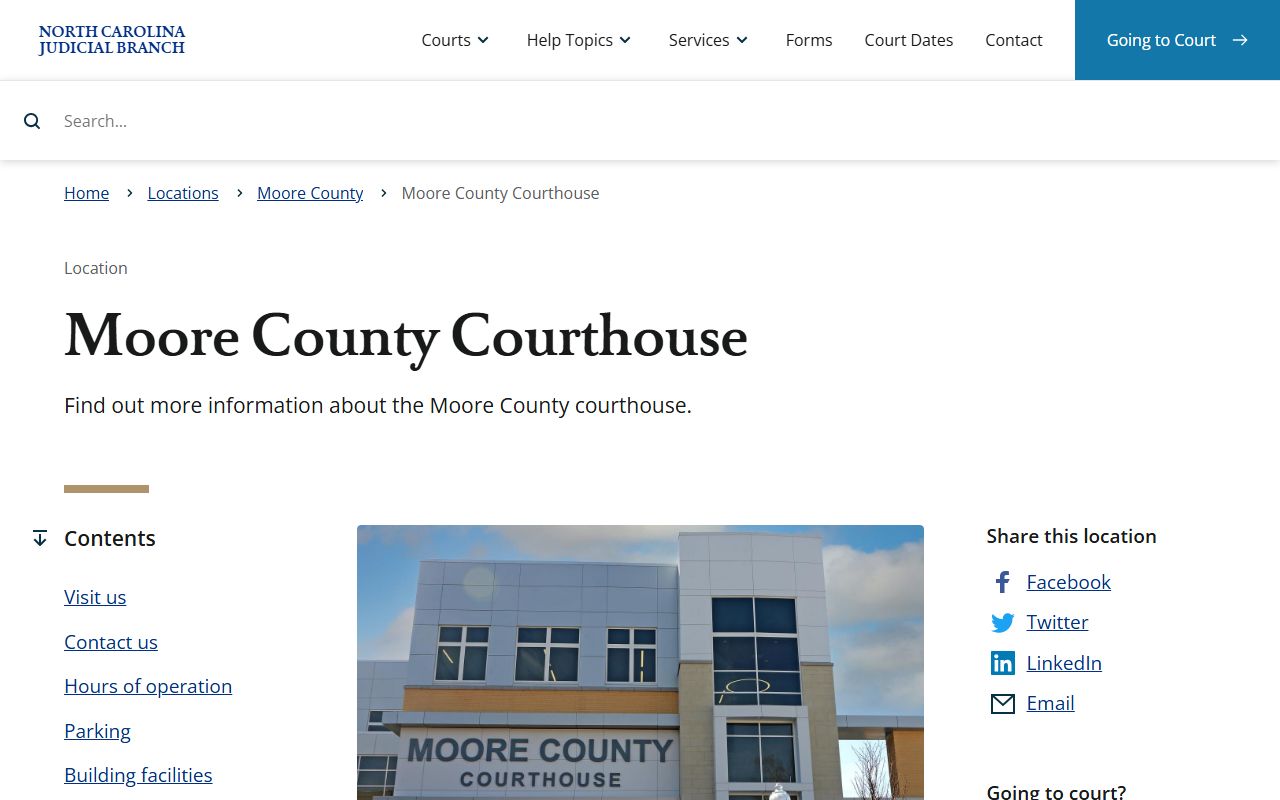
Parking at the Moore County courthouse is very limited. The closest lot is behind the Register of Deeds office on Dowd Road. The wheelchair entrance is at the basement level door. Plan your visit to arrive early, as spaces fill up during busy court days.
Visit the NC Judicial Branch website for current schedules and contact details for the Moore County Estates Division.
| Court |
Moore County Clerk of Superior Court Moore County Courthouse Carthage, NC Phone: Check nccourts.gov for current number |
|---|---|
| Hours | Monday through Friday, 8:00 AM to 5:00 PM |
| Website | nccourts.gov/locations/moore-county |
How to Search Moore County Probate Records
You can search probate court records in Moore County by visiting the courthouse in Carthage during business hours. Staff at the Clerk of Superior Court office can look up estate cases by name or case number. Bring a valid photo ID when you visit. The staff can pull up case files, show you what documents are available, and make copies on the spot.
The North Carolina eCourts portal also provides online access to case records. Go to nccourts.gov to use the search tool. Enter the party name or case number to find probate court records filed in Moore County. Basic case details are free to view. For certified copies or full documents, contact the Moore County clerk.
To look up probate court records in Moore County, gather the following before your search:
- Full legal name of the deceased
- Year the estate was opened or the death occurred
- Case number if you have it
Note: Moore County has a large retiree population in the Pinehurst and Southern Pines areas, so the Estates Division handles many estate cases. Calling ahead can help you avoid long wait times.
Moore County Estate Administration
Filing an estate in Moore County follows the process set by North Carolina law. You begin at the Clerk of Superior Court in Carthage with the original will and a certified death certificate. The clerk reviews the will and determines how to proceed. If there is no will, the estate goes through intestate administration. The clerk appoints a personal representative who takes an oath at the courthouse.
The representative must publish a Notice to Creditors in a local Moore County newspaper for four straight weeks. This gives creditors 90 days from the first publication to file claims against the estate. An inventory of all assets must be filed within 90 days of the representative qualifying. Annual accounts showing income and expenses must also be filed with the Moore County clerk. Each of these filings becomes part of the probate court records.
Common form probate in Moore County does not require a hearing but can be challenged for up to three years. Solemn form probate includes notice to heirs and a hearing, making the result final immediately. The choice between the two depends on the family situation and whether all heirs agree. After debts and claims are resolved, the remaining assets go to the beneficiaries. A final account is filed, the clerk approves it, and the estate closes.
Probate Court Fees in Moore County
Moore County follows the statewide fee schedule for probate court records and estate filings. The Clerk of Superior Court collects these fees when you open a case. Verify current amounts before filing.
Typical fees for estate matters in Moore County:
- Application to open an estate: $120
- Estate administration fee: 0.4% of estate value, maximum $6,000
- Certified copies of letters: about $5 per copy
- Notice to Creditors: $50 to $150 for publication
- Bond premium: varies based on estate size
The personal representative must post bond unless the will waives it. North Carolina allows up to 5% of estate receipts and disbursements as compensation for the representative. The Moore County clerk sets the amount if there is a dispute among beneficiaries.
Small Estates in Moore County
For smaller estates, Moore County allows a simplified process called Collection by Affidavit. This avoids full probate and reduces the paperwork involved in settling probate court records.
The affidavit works for personal property of $20,000 or less. If the applicant is the surviving spouse and only heir, the limit is $30,000. You must wait 30 days after the death to file. Real property that needs to be sold within two years disqualifies you from this process. Bring the completed Form AOC-E-203B, a certified death certificate, the original will if any, asset details, photo ID, and the filing fee to the Moore County clerk.
Note: The small estate affidavit covers personal property only. Real estate in Moore County passes through separate legal channels.
Historical Probate Records in Moore County
Moore County has maintained probate court records since 1784. Early estate files include wills, property inventories, bonds, and guardianship papers from the post-Revolutionary period. The Sandhills region attracted settlers who farmed, operated sawmills, and worked in turpentine production. These industries show up in early estate inventories that list tools, livestock, and land holdings.
For pre-1784 records, check Cumberland County, since Moore was carved from it. The North Carolina State Archives holds microfilm of many older records. Pre-1868 probate court records are available in the Archives' Reading Room in Raleigh. Visit archives.ncdcr.gov to plan your research trip or to learn about requesting records by mail.
Moore County's population has grown significantly in recent decades, driven by the resort communities around Pinehurst. This growth means the Estates Division handles more cases now than at any point in the county's history. The clerk's office has adapted to this demand while still maintaining records from all prior decades.
Browse Nearby Counties
These counties border Moore County. Confirm which county the deceased person lived in before filing. Probate court records must be submitted in the county where the person was domiciled at death.