
Lee County Probate Records Search
Lee County probate court records are managed by the Clerk of Superior Court in Sanford. The clerk office stores wills, estate inventories, letters testamentary, guardianship documents, and all related filings. Searching for probate court records in Lee County is available to anyone, whether you are settling an estate, conducting legal research, or looking into family history. The Estates Division provides forms and answers procedural questions about the estate process.
Lee County Quick Facts
Lee County Probate Court Clerk
The Clerk of Superior Court in Lee County acts as the judge of probate. This office manages all estate filings, will admissions, and guardianship proceedings. Staff in the Estates Division can help you find probate court records and explain the filing process.
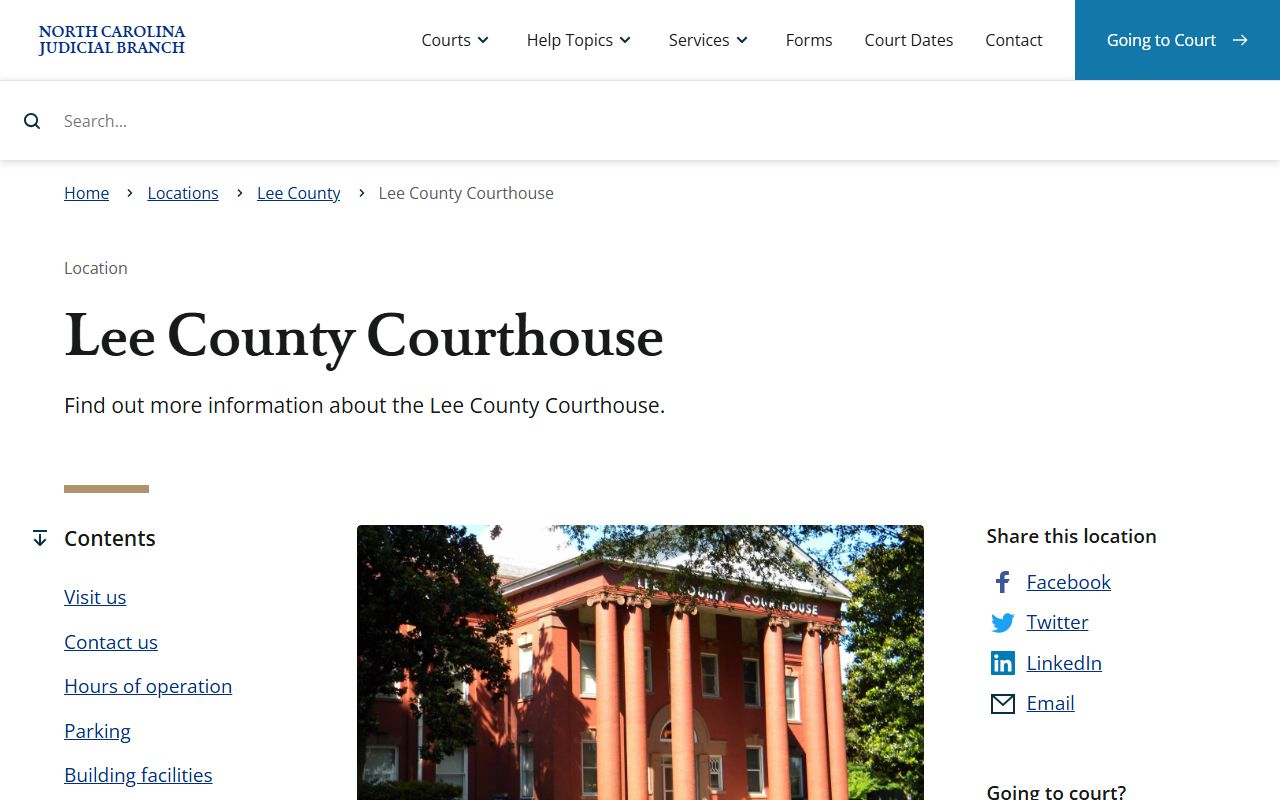
The Lee County courthouse is located at 1401 South Third Street in Sanford. Parking is available off Courtland Drive or Elm Street. The building has wheelchair access and vending machines. The office is open Monday through Friday from 8:00 AM to 5:00 PM. All probate filings for Lee County residents go through this location.
View court details at the Lee County page on nccourts.gov.
| Court |
Lee County Clerk of Superior Court 1401 S Third St Sanford, NC 27330 Phone: (919) 718-3000 |
|---|---|
| Hours | Monday through Friday, 8:00 AM to 5:00 PM |
| Website | nccourts.gov/locations/lee-county |
Search Lee County Estate Records
There are two ways to search probate court records in Lee County. The online method uses the state court system. The in-person method involves visiting the courthouse.
The NC eCourts portal lets you search estate cases by name or number. Basic information about cases filed in Lee County is available for free. This includes filing dates, party names, and case types.
For the actual documents, visit the clerk office in Sanford. Staff can pull the file and let you review all papers. You can order copies, including certified copies needed for legal matters. Bring your ID and any details you have about the estate.
You can also request Lee County probate court records by mail. Send a written request to the clerk at 1401 S Third St, Sanford, NC 27330. Include the full name of the deceased, date of death, and the documents you need. Enclose a check for the copy fees. The clerk will mail the copies back to you. Allow one to two weeks for processing.
Note: Lee County maintains records from 1907 forward. For estates of residents who lived in this area before 1907, check the records of Chatham County or Moore County, the parent counties.
Lee County Estate Administration
Opening an estate in Lee County starts at the Clerk of Superior Court in Sanford. The process follows North Carolina law under N.C.G.S. Chapter 28A.
The executor or applicant files the original will (if one exists), a certified death certificate, and Form AOC-E-201. The clerk reviews the application and admits the will to probate. The personal representative qualifies by oath and possibly bond. The clerk issues letters testamentary or letters of administration depending on whether there is a will.
The representative must then publish a Notice to Creditors in a local paper for four consecutive weeks. Creditors get three months to file claims. During this time, the representative collects assets, pays debts and taxes, and prepares for distribution. The final accounting and distribution complete the process.
All documents filed create permanent probate court records at the Lee County courthouse.
Lee County Probate Court Fees
Lee County charges the standard North Carolina fees for estate matters under N.C.G.S. 7A-307.
Key fees include:
- Estate opening fee: $120.00
- Administration assessment: 0.4% of estate value, up to $6,000
- Certified copies of letters: about $5.00 each
- Creditor notice publication: $50 to $150
Bond premiums, attorney fees, and personal representative compensation are additional costs. Confirm current fees with the Lee County clerk before filing.
The personal representative may also need to pay for real estate appraisals, vehicle valuations, and tax preparation. These costs come from the estate. North Carolina allows up to 5% of total receipts and disbursements as executor compensation. The clerk decides the final amount if heirs disagree. All fee payments are documented in the Lee County probate court records.
Small Estate Process in Lee County
Lee County residents may qualify for the small estate affidavit under N.C.G.S. 28A-25-1. Personal property must be $20,000 or less, or $30,000 for a surviving spouse as sole heir. Wait 30 days after the death. File Form AOC-E-203B with a death certificate, asset list, and photo ID. The fee is $120.
Real property is not covered. The affidavit creates a probate court record at the Lee County clerk office.
The affidavit requires an itemized list of every asset. Include bank statements, vehicle titles, and uncashed checks. The clerk reviews the form and issues a certified copy. Banks and other institutions accept this certified affidavit as authority to release funds. The process usually wraps up in a few weeks.
Note: If the estate includes real property or exceeds the dollar limit, full probate administration is needed in Lee County.
Historical Lee County Probate Records
Lee County was formed in 1907 from Chatham County and Moore County. It covers 259 square miles in the Sandhills region of central North Carolina. The county is named after Robert E. Lee. Because it was created in the early 1900s, its probate court records all date from 1907 forward.
The courthouse in Sanford holds all Lee County probate court records. For estate records of area residents who died before 1907, check with the Chatham County or Moore County clerk offices, or visit the North Carolina State Archives in Raleigh.
Lee County's location at the crossroads of several highways made Sanford a commercial center in the region. Its estate records reflect the growth of this community through the twentieth century and into the present day.
Browse Nearby County Records
These counties border Lee County. Verify the correct county before searching for probate court records. Estate cases are filed where the deceased person lived.